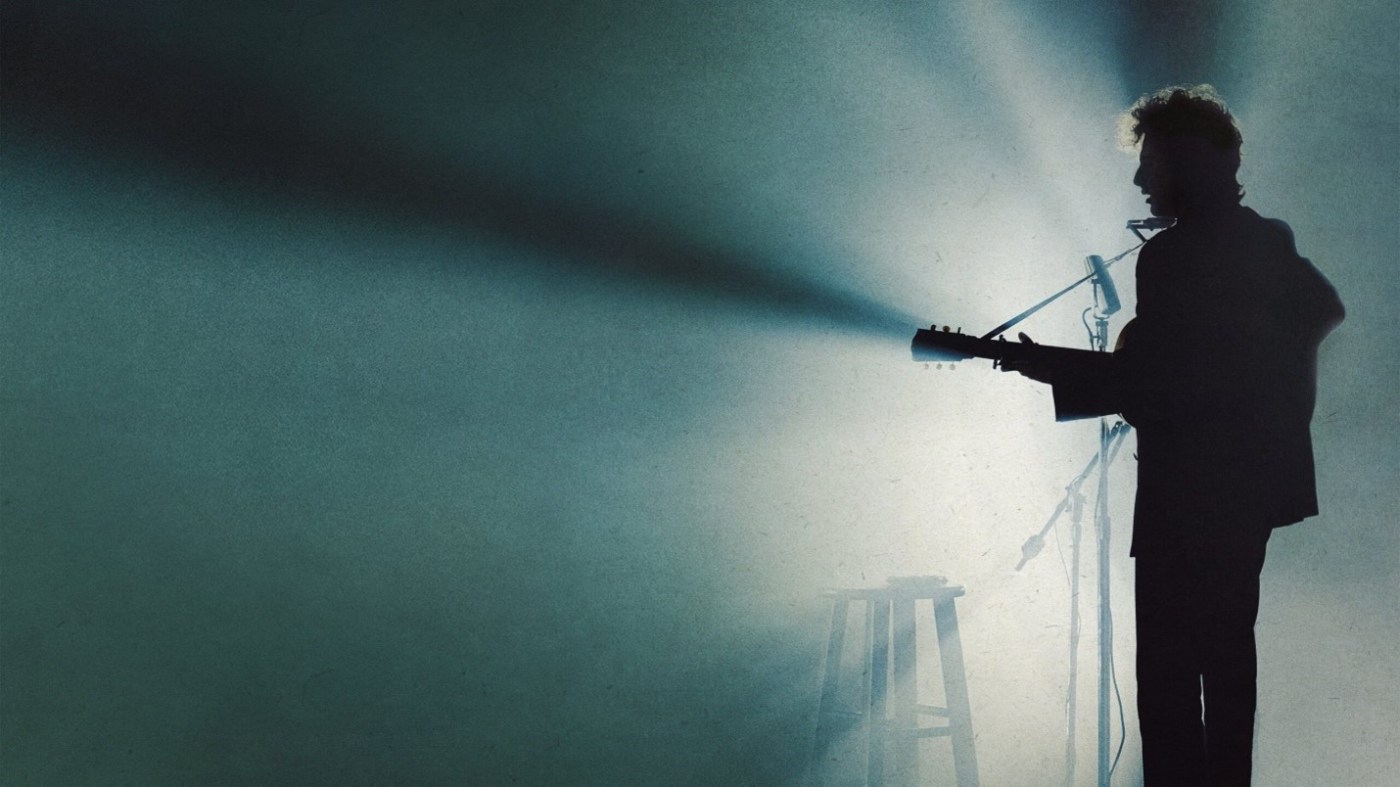
What do we see in Bob Dylan? For certain, his songs and his iconic image are symbols of “The 1960s” as broadly understood in American memory. Outside that specific historical context, one that Dylan has chafed against his entire career, his image is that of the unrepentant artist, doggedly following his vision despite the political or historical exigencies of the moment. This question is central to the much-talked-about musical biopic A Complete Unknown, starring Timothée Chalamet as Bob Dylan, Monica Barbaro as Joan Baez and Edward Norton as Pete Seeger. The film’s director, James Mangold, is no stranger to the musical biopic having also directed the 2005 Johnny Cash biopic Walk the Line. The film traces the familiar myth of Dylan alongside other American musical icons. The biopic stresses the relative obscurity of the central protagonist, his seemingly supernatural musical gifts, and the pitfalls of fame and fortune, closing with a return to the stage for a final, redemptive performance.
A Singular Genius Beyond Politics
To its credit, this film lets the music (performed with great aplomb by the likes of Chalamet and Barbaro) speak for itself. But in terms of narrative, we are left, often, with reaction shot after reaction shot: Pete Seeger watching the prodigy fulfill his dreams of a popular musical culture unmediated by corporate forces; Joan Baez gazing ambivalently, then with smitten abandon, as the young imp performs his own songs; fans enthralled, fans enraged. However, few of these characters are seen discussing the alchemy of songs like “Blowin’ in the Wind,” for example, that is taken as a masterpiece without question—its historical context barely hinted at.
Indeed, when a young Dylan performs at the March on Washington for Jobs and Freedom in the summer of 1963, the film’s audience experiences it third hand: Dylan’s then-girlfriend Sylvie Russo (played by a perpetually dew-eyed Elle Fanning) lies on a bed in the apartment she shares with Dylan, watching on TV as Ossie Davis introduces him to the crowd. It is a signal moment for the film that Dylan’s appearance at the March on Washington is played through a TV screen. In fact, many of the political and historical events that contextualize Dylan’s initial rise to fame (including the Cuban Missile Crisis and the Civil Rights Movement) are inserted into the film with shots of televisions playing the requisite footage. It is as if “history” and “politics” are sequestered “out there,” whereas Dylan’s genius emerges outside of the expectations of his contemporaries in the folk revival. The arc of the film fixes obsessively on the retrograde idealism of older folk revival icons like Alan Lomax and Pete Seeger as the box out of which Dylan’s genius needs to escape.
While this framework could be applied to the development of Dylan’s songwriting—Dylan could never remain a topical songwriter such as Phil Ochs nor a curator of the putatively “pure” folk tradition like Lomax—the film hesitates to give voice to the politics of the folk revival. Mirroring the pitfalls of the wider musical biopic genre, the film knots together the enduring myth of American individualism with the myth of the singular genius whose success is hampered by what “the suits” want the genius to play—or play down.
A powerful moment in the film comes when Seeger performs “Wimoweh” as a coordinated sing-along with the audience a collective instrument: it is an engaging, sentimental moment. The reaction shot of Dylan conveys that he is both genuinely impressed at Seeger’s ability to engage an audience and cold-eyed enough to size up this performance as a potential tool for his own developing performance style. Here the film lends credence to Dylan’s deep respect for Seeger and his connections to Woody Guthrie—Dylan’s early musical hero. At the same time, Chalamet registers the fitful, racing mind of the young songwriter, eager to learn and eager to outpace his teachers. By letting songs play out for much longer than typical montage-bound biopics, the film is able to represent the appeal of the folk music revival’s ostensible authenticity. In this same vein, a different scene shows Joan Baez pushing away her microphone while performing a stunning acapella version of “The House of the Rising Sun” to an entranced audience. Yet, the reasons why these gestures mattered so much to the live audience (and why, later, the audience erupted when Dylan “went electric” at Newport) is not clear to a viewer not already familiar with the folk music revival.
The Marginalization of Politics
Given the almost impossible task of cinematically representing the creative musical process—and recognizing that any Hollywood musical biopic must condense such a process and offer an exciting narrative arc—we can set aside inevitable historical conflations and muddled timelines. However, we should consider what this genre offers American audiences. As A Complete Unknown exemplifies, the genre reiterates both the myth of the intrepid individual whose only duty is to his own vision and the myth of great men of history; together, these myths attempt to redeem the promise of American greatness.
The loose handling of the particulars of the historical context subtends the mythic lineaments of the film. When Fanning’s character has to remind a young Dylan what CORE, a major Civil Rights organization stands for (the Congress of Racial Equality), his bemused, indifferent response is played for laughs.[1] Moments like this are priming the audience for the final confrontation between the idealistic folk audience at Newport in 1965 and the leather-jacketed rebel heedlessly blasting his primal rock and roll (more on that term “primal” in a moment). The film broadcasts the idea that the demands of justice, especially racial justice, made by young white college students, was performative, limited, and merely an attempt to assuage guilt. In addition to its dismissive treatment of Americans more consistently political than Dylan, the film excuses Dylan’s turn away from political music by pointing to his genius.
It is not enough for the film to excuse Dylan’s turn away from the politics that infused the folk revival, it also downplays the social-consciousness of many of Dylan’s songs. For instance, in one of his first original compositions “Song to Woody,” Dylan in fact distinguished between the “hard travelin’” endured by Guthrie and other dust bowl refugees and his own Jack Kerouac-inspired traveling. In this early song, real travails experienced in the wake of political catastrophes are paired with the desire to learn from that history. The song is a notable composition: it asks questions about history, including how to respect suffering of the past in which you took no part, and how to create art in a responsive way. These are perennial themes in Dylan’s work, among others, and it is to the detriment of the film that this song is treated in the film as a unique, decontextualized curio at Guthrie’s deathbed.
The film replicates the same general amnesia in other performance scenes. For example, when recording the song “Highway 61 Revisited,” which explores the akedah (the binding of Isaac by Abraham) in cynical hipster language, the whining whistle that Dylan uses to punctuate the opening of each verse is depicted as the center of great fun that Dylan and his band are having, thumbing their noses at the folk music elite. But in America in 1965, sons were being asked by their fathers’ generation to sacrifice their lives in Vietnam. It is telling that the film takes more time showing Dylan purchasing said whistle than addressing the emerging shadow of the Vietnam War as Dylan’s songwriting takes flight. “Highway 61 Revisited,” an incisive a critique of American war-making and the delusions of popular culture, is reduced by the film to yet another stone thrown at the fuddy-duddies like Pete Seeger.
The film succeeds at providing a series of set pieces that foreground how bedazzling Dylan’s early compositions were for audiences, from tiny coffeehouses to larger stages. But the wordless gazing meant to attest to the genius of the songs fails to convey the drama of the songs in their historical and political context; why these songs mattered at this time to so many young people is lost. American amnesia succeeds here at the expense of truly provocative aspects of Dylan’s art. In one scene, New York City, and by extension the nation, begins to come undone as the Cuban Missile Crisis unfolds across radio and TV. Joan Baez—like everyone else in the city, except Dylan—is unsure of what to do and feels powerless in the face of a looming nuclear catastrophe. She runs into the Gaslight Café where Dylan—framed as the great man of history—plays “Masters of War” (most likely composed after the Missile Crisis), which stops her in her frantic steps.
At the conclusion of “Masters of War,” Baez and Dylan embrace backstage and spend the night in each other’s arms. Watching TV the next day in Dylan’s apartment, they learn that the Crisis has come to a resolution: “Well, now that’s over,” murmurs Dylan darkly. A generous reading of the scene is that the composer of “Masters of War,” a song that indicts war profiteering, is readying himself for the next confrontation. However, by relegating political crises to the TV screen’s tiny borders, the filmmakers opt to cast Dylan as a political seer above the fray, chasing his own visions. In reality, Dylan both engaged the political while bristling at characterizations that he was a political prophet. Although this dichotomy is central to Dylan’s compositions and the development of his career, the film presses heavily on the liberating potential of individualism, wherein any kind of commitment (romantic or political) is a constraint. The “unknown knowns” in A Complete Unknown are the politics of then and now—the ideology of American individualism. This film will surely be understood decades from now as a representation of individualism run rampant in 2025. This is an individualism, with inflections of authoritarian populism, which valorizes the putative freedom of individual constituencies against the responsiveness to the vexations of American history that, paradoxically, are at the center of some of Dylan’s most potent work.
The “Magical Negro” Returns: Race and History in A Complete Unknown
One of Dylan’s achievements is his appreciation and deep study of African American music. In this film, however, race, even including the Civil Rights Movement, is ancillary to the story of the singular genius. African American music, specifically the blues, is used a touchstone validating Dylan’s hip outsider status. One of the film’s fabricated segments is troublesome not for its fictional status, but for the way it interpolates the myth of African American “soul” as the touchstone for musical authenticity. In this scene, Dylan is late for his appearance on Seeger’s television program Rainbow Quest. Seeger calls in the blues performer Jesse Moffette (portrayed by blues guitarist Big Bill Morganfield, the son of Muddy Waters) to fill Dylan’s time. The character is a complete fabrication.
Dylan soon appears at the TV studio and is allowed to play for Moffette while the cameras roll. Moffette has been sipping from a bottle of gin—Seeger declines to join him, but the young Dylan partakes. The bottle acts as a symbol of the racist American myth of Black liberated eroticism and natural, soulful, “primal” folk expression. In reality, the blues is a complex, intertextual, and musically capacious style that one dedicates a life to mastering. But the film shoehorns into this egregious moment a “magical Negro” bestowing upon Dylan his approval—Dylan takes Moffette’s guitar and sings some verses of his own blues. Moffette’s delight in Dylan’s playing utilizes a set of racist tropes to deem Dylan’s natural genius as “authentic” and counter to Seeger’s dismissiveness towards popular Black forms of music, such as rock and roll, as hopelessly unhip. While Dylan had a deep appreciation of Black music, the film’s use of racist tropes to sequester the “hip” from the “unhip” is a deleterious and glib gesture.
As if to distance itself from this deployment of racist tropes, the film includes Alan Lomax, a dedicated collector of African American folk music and the author of The Land Where the Blues Began, arguing against including the Paul Butterfield Blues Band in the Newport Folk Festival’s 1965 lineup. His argument? They are white, so they are inherently not “authentic” blues players. Dylan, by contrast, hires the Butterfield Band’s prodigy electric blues guitarist Mike Bloomfield, informing viewers that Dylan is on the “right” side of cultural history. We are meant to see Dylan as the white liberator of Black performers, revealing to a white crowd that, unlike cultural traces to be cataloged by Lomax, these are performers in their own right. While some of this tracks with the historical record in terms of Lomax’s cultural politics, the film’s loose regard for the complexities of racial border-crossing in popular music is aggravated by the inclusion of the wholly fictitious Moffette scene.
At the climax of the film, when Dylan decides to “go electric” on the Newport Folk Festival’s stage to the raging disapproval of Lomax and the mournful dismay of Seeger, the soundtrack registers the entwining of the power of Dylan’s rock and roll compositions with the tropes of racial authenticity. It is evening, and Dylan is prowling the site of the festival, anxious about getting on stage. On stage are African American singers from Texas, performing the work song “Let Your Hammer Ring,” while chopping wood and thudding out the powerful rhythm. Such a performance was precisely the kind of authentic work song Lomax and Seeger had been promoting at the Festival for years. At this moment, the thudding rhythm blends into the soundtrack; the extra-diegetic music prepares us for Dylan’s oncoming revolt which will entail performing with electric instruments on this hallowed stage. Like the invented blues singer Jesse Moffette, these performers exist in the film to buttress the idea that Dylan, along with Black musicians, is deeply in tune with a primal authenticity so powerful it will blow away liberal pieties. The film offers the frisson of transgression, but it does so by bolstering the American myth of individuality and misrepresenting the intersections of race, music, and politics in the mid-1960s. A Complete Unknown is symptomatic of a time in American culture where “the political” as such is suspect and it utilizes the classic Hollywood trope of the outlaw, bound to his own code of honor and independence. In offering its audience this vision of the artist, it shortchanges the way that Dylan’s work has always been a complex meditation on American memory and history.
[1] Underlining the film’s politics, Fanning’s character—the activist and artist Suze Rotolo—who educated Dylan in Civil Rights politics and the poetry and music of Bertolt Brecht, is relegated to a half-fictionalized “Sylvie” who serves largely as one nexus of a romantic triangle with Dylan and Baez.
Photo Credit: Searchlight Pictures
 Clio and the Contemporary
Leave a comment