In March 1971, weeks into the US-backed invasion of Laos, the San Francisco Chronicle’s Art Hoppe wrote what would become his most famous column, “To Root Against Your Country.” It began,
The radio this morning said the Allied invasion of Laos had bogged down. Without thinking, I nodded and said, “Good.”
And having said it, I realized the bitter truth: Now I root against my own country.
This is how far we have come in this hated and endless war. This is the nadir I have reached in this winter of my discontent. This is how close I border on treason:
Now I root against my own country.[1]
Hoppe went on to express the trajectory of many Americans during the Vietnam War. He charted the path from youthful idealism fueled by American victory over fascism in the Second World War to disillusionment over presidential lies, the draft, and the sickening realities of “the massacres, the body counts, the free fire zones, the napalming of civilians.”
As Hoppe’s column suggests, 2025 is not the first time in modern US history that Americans have expressed despair, fear, and anger in response to the United States relinquishing some its most redeeming values and traditions. Previous moments of crisis include the end of Reconstruction, when local and state governments demonized and reversed efforts to foster equality for Black Americans, leading to nearly a century of disenfranchisement and segregation. In 1918, the US adopted the Sedition Act, which criminalized speaking ill of the government and carried a maximum penalty of 20 years in prison and a $10,000 fine. This wartime law stayed on the books and was used after World War I to arrest thousands of people and deport hundreds during the Palmer Raids. Additional examples of crisis and disillusionment echo loudly in 2025 amid DOGE cuts and deportations, from Ronald Reagan’s attacks on Great Society programs to the horrific treatment of “enemy combatants” during the War on Terror.
Yet, 2025 feels—and in some ways is—distinctly ominous for the sheer number of fronts the Trump Administration has opened. The zone is indeed flooded, from the gutting of USAID and turning on Ukraine to attacking allies and adversaries alike in a global trade war, scraping the achievements of Black Americans from government websites, and sending legal residents to a notorious prison in El Salvador without due process. Four years of this is staggering to imagine.
Historical analogies are always imperfect. But if we consider the roughly four-year period that preceded Art Hoppe’s column, we can glimpse a similar mixture of relentless man-made tragedies that provoked despair—but also powerful dissent.
Then and Now: Onslaught, Despair, and Dissent
1968 alone careened from the Tet Offensive (which revealed the US was far from stabilizing South Vietnam) to the tragic assassinations of Dr. Martin Luther King Jr. and the leading antiwar presential candidate, Robert F. Kennedy. That summer, outside the Democratic National Convention, Chicago police brutalized protestors, journalists, and unlucky Chicago residents in what a subsequent government report called a “police riot.” In November, Richard Nixon won the presidency while lying about having a “secret plan” to end the war. And in 1969, the Nixon Justice Department indicted antiwar activists, later dubbed the Chicago 7, for conspiracy and crossing state lines to start a riot.
The US war in Vietnam lurched on for an additional four years. Until July 1971, when the 26th Amendment lowered the voting age from 21 to 18, the military drafted men at age 18, 19, and 20, who could neither vote nor, in most states, legally buy beer at home. In total, over 58,000 Americans died in Vietnam. Young men who resisted the draft risked jail time, as did adults who aided draft resisters, and tens of thousands of Americans fled to Canada as draft dodgers.
In the meantime, violence escalated at home. In 1969, law enforcement assassinated Black Panther Party leader Fred Hampton in his Chicago apartment. In 1970, the US invasion of Cambodia, Vietnam’s neighbor, spurred protests on college campuses across the country. When the National Guard fired on students at Kent State University, killing four, public opinion supported the National Guard, not the student protestors.
Less than a year later, Nixon once again expanded the war, this time with a US-backed South Vietnamese invasion of Laos. Hoppe’s column, written the following month, voiced the disillusionment and frustrations of many. As Hoppe noted, “It is a terrible thing to root against your own country. If I were alone, it wouldn’t matter. But I don’t think I am alone. I think many Americans must feel these same sickening emotions I feel. I think they share my guilt. I think they share my rage.”
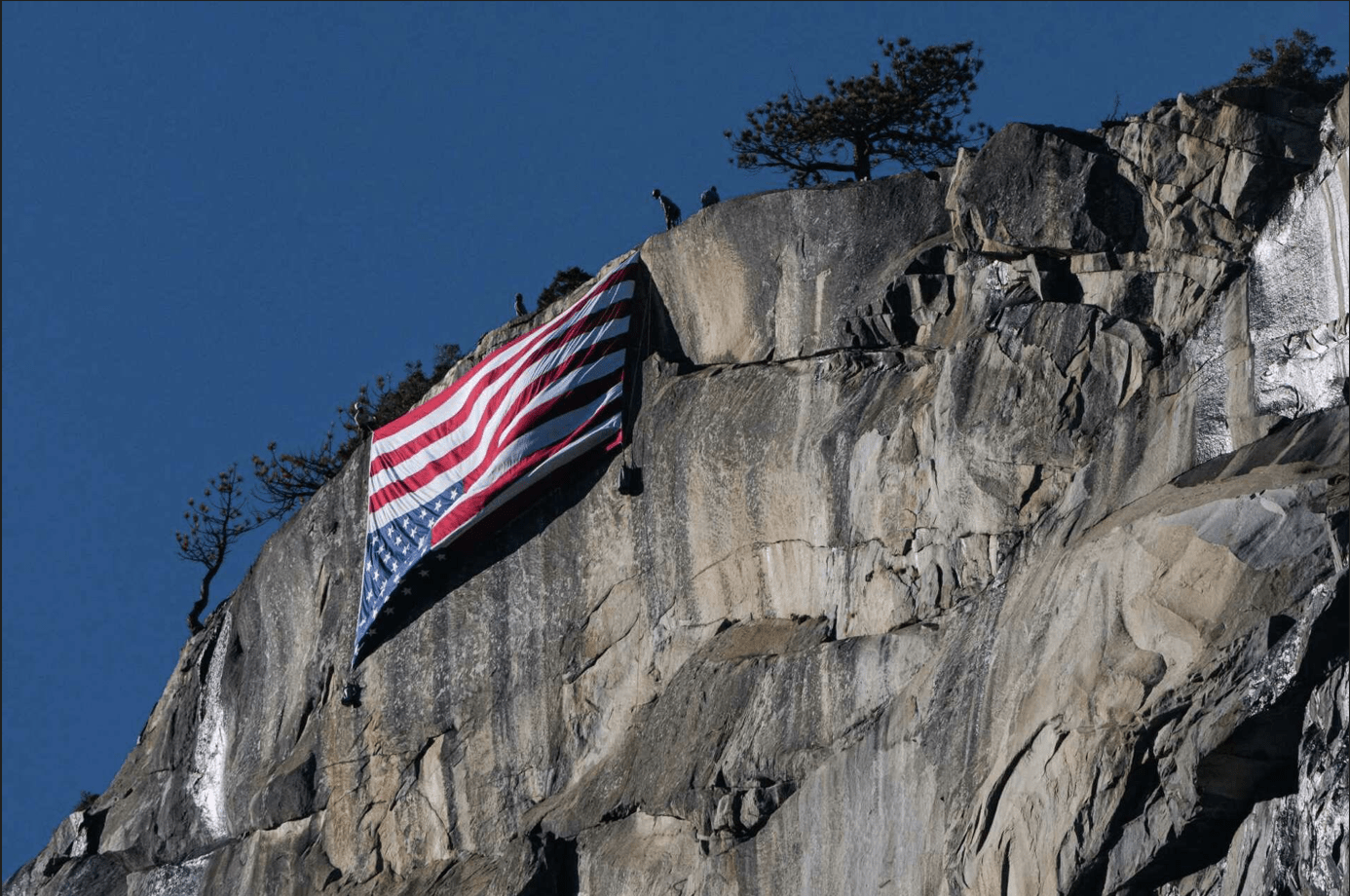
In 2025, Americans have expressed similar anger, guilt, and distress in reaction to the policies of the Trump Administration. Nationwide protests on April 5 demanded an end to the “billionaire takeover and rampant corruption,” to cuts to programs like Medicare and Social Security, and to the targeting of immigrant, trans, and other communities. Americans sickened by US policies have protested Trump’s threats to annex Canada and joined people around the world in calling for boycotts of the United States, in both cases, striking similar notes to Hoppe’s 1971 column. The theme of a nation in peril was evident as early as February, when Yosemite Park employees hung an American flag upside down, a signal of “dire distress.”
Critical Patriotism in Moments of Dire Distress
The US flag-as-distress-signal is a poignant example of what American Studies scholar Ben Railton calls “critical patriotism.”[2] Railton’s 2021 book, Of Thee I Sing: The Contested History of American Patriotism, outlines four (sometimes overlapping) forms of patriotism—celebratory, mythic, active, and critical. He notes that Donald Trump, during his first term, exemplified celebratory patriotism with his insistence on America’s “unique and unrivaled greatness.”[3] Conversely, throughout the nation’s history, activists, journalists, politicians, artists, veterans, and others have demonstrated their loyalty to American ideals and to their fellow citizens through protest and critique. In this vein, Teddy Roosevelt articulated a patriotism greater than fealty to a president when he wrote, “Patriotism means to stand by the country. It does not mean to stand by the President or any other public official save exactly to the degree in which he himself stands by the country.”[4]
Wars, demanding immense sacrifice, lean heavily on patriotism. During the Vietnam War, some veterans returned home distraught by what they had seen and done; they went further than Roosevelt, insisting not only that patriotism must entail critique of nefarious leaders, but that critiquing a nation gone astray is the highest form of patriotism.
In early 1971, Vietnam Veterans Against the War (VVAW) organized an inquiry into American war crimes in Vietnam. In the wake of the My Lai Massacre, VVAW sought to show that My Lai was not, as the military claimed, an isolated incident. By having Vietnam veterans themselves testify, VVAW hoped to trigger renewed public opposition to the war.[5] They called the inquiry the Winter Soldier Investigation, in reference to the opening lines of Thomas Paine’s The American Crisis—“These are the times that try men’s souls: The summer soldier and the sunshine patriot will, in this crisis, shrink from the service of his country…” (Published in late 1776, Paine sought to rally the Continental Army on the heels of repeated defeats and dwindling troops; George Washington, in turn, reportedly ordered Paine’s words read to his men before crossing the Delaware River). For VVAW, the implication was clear: summer soldiers show up when the going is easy, but winter soldiers, who do the hard work on the darkest days, are the true patriots. Invoking this theme, the opening statement of the Winter Soldier Investigation began, “Like the winter soldiers of 1776, who stayed after they had served their time, we veterans of Vietnam know that America is in grave danger.”[6]
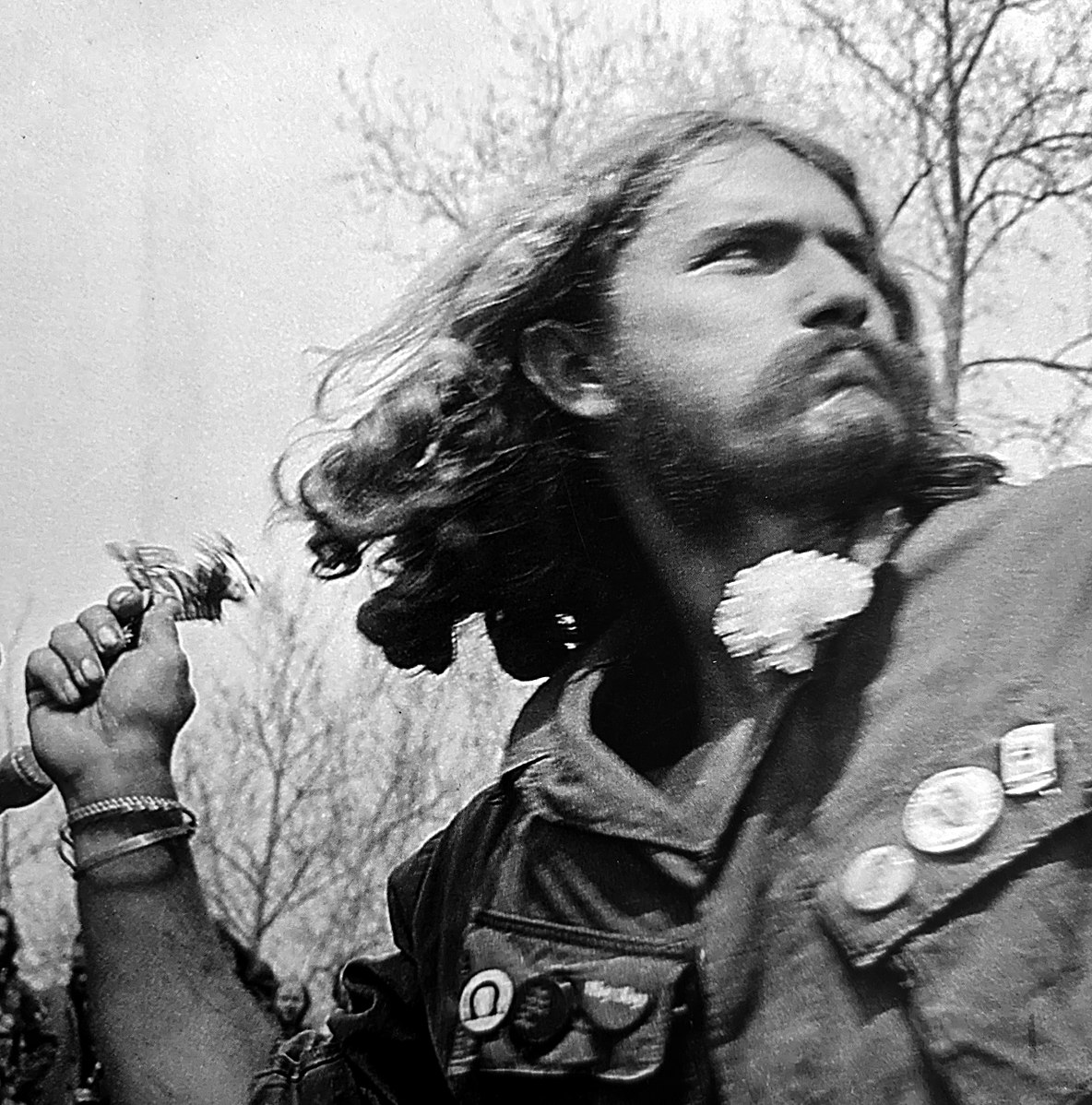
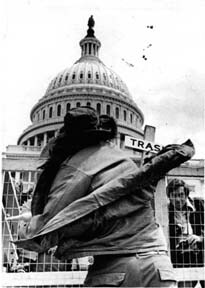
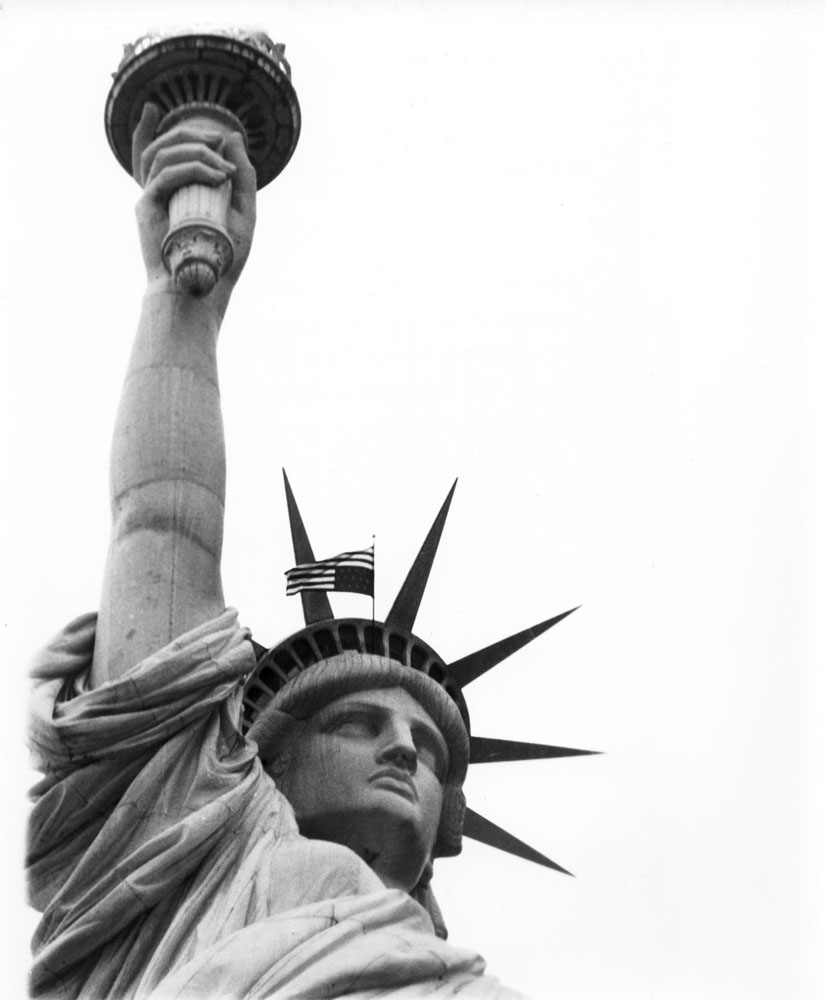
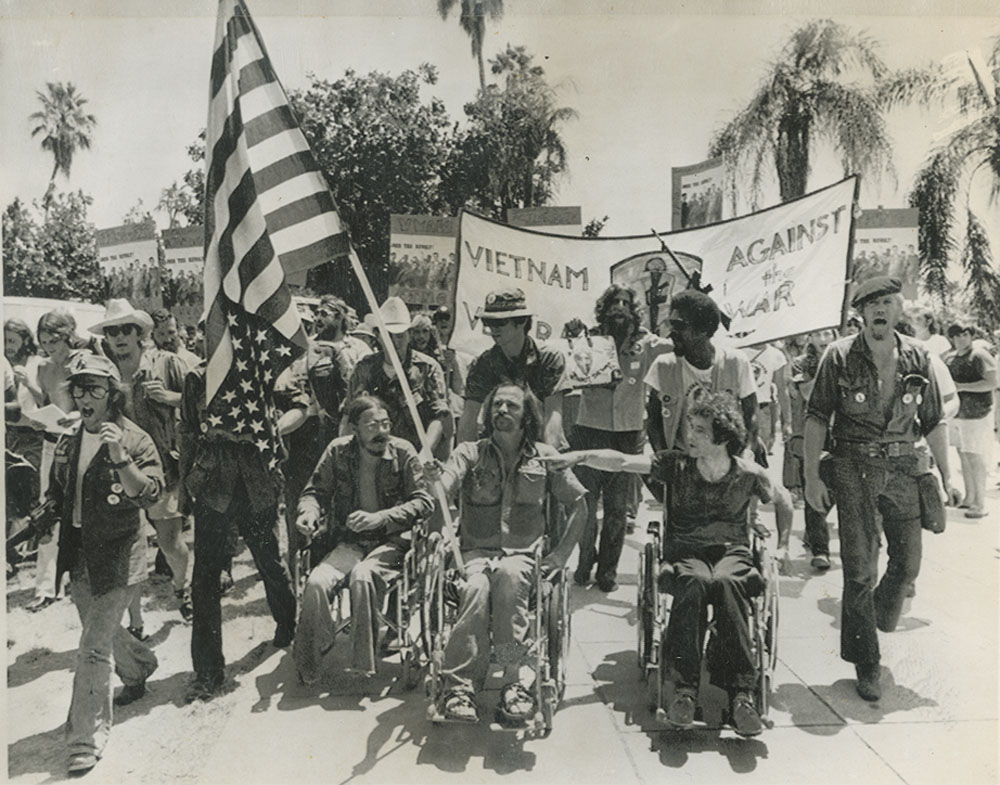
Subsequent VVAW actions took dissent-as-patriotism further. On an April morning in 1971, as part of a larger VVAW campaign in Washington, DC, Vietnam veterans lined up to return their medals, throwing them onto the steps of the US Capitol in a wrenching demonstration of their opposition to the war. By noon, a hundred Silver Stars and over a thousand Purple Hearts lay among the medals on the Capitol steps.[7] Later that year, over a dozen VVAW members barricaded themselves inside the Statue of Liberty and hung an American flag upside-down from Lady Liberty’s crown; this feat restored antiwar coverage to page one of the New York Times. And in 1972, VVAW led a Silent March to the site of the Republican Convention, where Richard Nixon was being re-nominated for president. A group of veterans in wheelchairs led the march, including Ron Kovic, who carried an inverted American flag.[8]
Then and Now: Solidarity, Patriotism, and Perseverance
In the 1970s, things got darker before they got brighter. In November 1972, President Nixon won reelection with the biggest popular vote landslide in American history—against a candidate, George McGovern, who promised to end the war immediately.
And yet. Nixon resigned in disgrace over the Watergate scandal in 1974. Between 1973 and 1975, the Vietnam War ended in stages. And by 1976, key Nixon Administration officials had received multi-year prison sentences, while prominent antiwar activist Tom Hayden—a defendant in the 1969 Chicago 7 trial—was running for a seat in the United States Senate.
This history is a reminder, first, that both the war and Nixon’s presidency lasted for what felt to contemporaries like an impossible number of years. Second, while opponents of the war and critics of the Nixon Administration endured serious persecution, it did not last indefinitely. And finally, even though Nixon won reelection in 1972, dissent escalated in important ways in the late 1960s and early 1970s. Americans marched and staged protests that generated media attention and helped normalize dissenting views. They also engaged in mainstream politics—campaigning for antiwar candidates, lobbying members of Congress, and spearheading initiatives for voters to express their disdain for the war.
Among the antiwar movement’s most important actions were those that supported vulnerable groups. In 1967, adults not subject to the draft signed a statement of support for draft resisters, “A Call to Resist Illegitimate Authority.” Signees included Civil Rights leader Dr. Martin Luther King Jr. and the famous pediatrician Benjamin Spock.[9] At the same time, Women Strike for Peace, with members roughly the age of draftees’ parents, provided draft counseling and legal defense to draft resisters. The group also offered material support in the form of food and clothing, and visited jailed resisters and antiwar GIs in prison.[10] Beginning in 1968, American civilians stepped up support for active-duty GIs who opposed the war. Antiwar activists set up coffeehouses near military bases where GIs could read antiwar newspapers, talk about the war, and receive legal counselling.[11]
Supporting draft resisters and especially antiwar GIs not only helped individuals caught in the war machine, but also made it more difficult to prosecute the war. By 1971, Col. Robert Heinl described US forces in Vietnam being “in a state approaching collapse.” His report in Armed Forces cited GI coffeehouses and legal groups that supported dissenting GIs among the maladies afflicting the military and hampering prosecution of the war.[12] Two years later, opposition to the draft shaped the decision to abandon conscription in favor of an all-volunteer force.
While Americans supported vulnerable groups and helped jam the gears of war, they also increasingly framed their dissent as patriotism. Even Art Hoppe’s ostensibly unpatriotic 1971 column veered back towards patriotism in its conclusion; Hoppe wrote, in closing, “I would hope the day will come when I can once again believe what my country says and once again approve of what it does. I want to have faith once more in the justness of my country’s causes and the nobleness of its ideals.”[13]
The Lessons of Dissent and Limits of History
Today, echoing the Vietnam era, Americans are not merely objecting to policy decisions, but expressing anguish that the United States seems to be abandoning some of its best values, institutions, and alliances. While history can and should help us understand the present moment—both the authoritarian challenge and the sustained commitment needed to overcome it—history can only instruct so much. Activists today can draw lessons from those who came before, but in many ways, the current moment is far more daunting. Changes within the Republican Party and in American politics more broadly abet the Trump White House and hinder its opponents.
The Republican Party of 2025 is the culmination of over 50 years of a conservative movement that includes think tanks, legal organizations, and media. In the early 1970s, the Nixon presidency lacked both the playbook and institutional support that benefits the Trump Administration. Project 2025 (a product of the Heritage Foundation) and Trump ally Steve Bannon’s idea of “flooding the zone” both speak to the deliberate, orchestrated nature of the rapid policy changes unfolding today.
In addition, the Republican Party of the early 1970s, compared to today, was both more politically moderate and less beholden to the president himself. Nixon left office in 1974 because fellow Republicans told him that he must resign; if not, Republicans in Congress planned to vote with Democrats to impeach him over the Watergate cover-up.[14] In contrast, after January 6, Republican members of Congress largely closed ranks with the outgoing president, and today they show no sign of abandoning fealty to Trump.
Beyond the Republican Party, changes in American political culture make it harder to rouse opposition to Trump, compared with Nixon in the early 1970s. Americans in 2025, in part because of Watergate, display greater cynicism towards politics. The Clinton-Lewinsky scandal, the myth of WMDs in Iraq, and other political scandals (real and imagined) have contributed to a more cynical political culture, which is itself associated with increased support for extremist candidates. For Gen Z, cynicism towards politics and voting—if not the issues themselves—create barriers to addressing those issues.
Voter cynicism is exacerbated by decades-long changes to the news media and the rise of social media, both of which chip away at a sense of shared reality.[15] Furthering this, recent years have seen deliberate misinformation campaigns by foreign governments as well as Donald Trump’s repeated attacks on journalists and their credibility. In the 1960s–70s, Americans across the political spectrum drew different conclusions, but they regularly saw the same footage, heard the same commentary, and therefore shared similar reference points.
As Americans, residents of the United States, and people around the world grapple with this administration and its worst excesses, we can know that feelings of shame, despair, and rage have galvanized those who came before. The sense of insurmountable challenge is not new, but the challenges of 2025 are, in some ways, unprecedented. Historical analogies can sometimes be instructive, critical patriotism can sometimes disarm, and both can serve as inspiration, but there are new challenges here as well, and meeting them will require sustained work through many cycles of rage, despondence, and determination.
Featured image: Photo of American flag upside down at Yosemite National Park from Dr. Lucky Tran. Original post from February 23, 2025, available on X.
[1] Art Hoppe, “To Root Against Your Country,” San Francisco Chronicle, Mar. 1, 1971. The column is available on the Chronicle’s digital platform, SFGATE.
[2] Ben Railton, Of Thee I Sing: The Contested History of American Patriotism (Lanham, MD: Rowman & Littlefield, 2021), xvi.
[3] Ibid, 162.
[4] Teddy Roosevelt, 1918, quoted in Railton, xi.
[5] Andrew Hunt, The Turning: A History of Vietnam Veterans Against the War (New York University Press, 1999), 54.
[6] Ibid, 69. For more on the investigation, see Vietnam Veterans Against the War’s Winter Soldier Investigation page.
[7] As Hunt notes, VVAW’s campaign in DC received “widespread and largely sympathetic” news coverage. Ibid, 112–16.
[8] Ibid, 158.
[9] Signing the call was a misdemeanor and thus carried the risk of criminal prosecution. In 1967, Spock and four other men were indicted for their work on behalf of draft resisters. Four of the defendants (including Spock) were convicted of conspiring to aid, abet, and counsel draft resistance. Their convictions were overturned on appeal in 1969.
[10] Amy Swerdlow, Women Strike for Peace: Traditional Motherhood and Radical Politics in the 1960s (University of Chicago Press, 1993), 162, 171.
[11] David L. Parsons, Dangerous Grounds: Antiwar Coffeehouses and Military Dissent in the Vietnam Era (Chapel Hill: University of North Carolina Press, 2017), 20, 25.
[12] Richard Moser, The New Winter Soldiers: GI and Veteran Dissent During the Vietnam War (New Brunswick: Rutgers University Press, 1996), 132–33.
[13] Hoppe, “To Root Against Your Country,” SFGATE.
[14] For a detailed study of Republicans within the Nixon administration who thwarted the president’s abuses of power, see Michael Koncewicz, They Said No to Nixon: Republicans Who Stood Up to the President’s Abuses of Power (Oakland: University of California Press, 2020).
[15] For more on developments that reshaped television news and the consequences of a more decentralized media landscape, see Kathryn Cramer Brownell, 24/7 Politics: Cable Television and the Fragmenting of America from Watergate to Fox News (Princeton University Press, 2023).
 Clio and the Contemporary