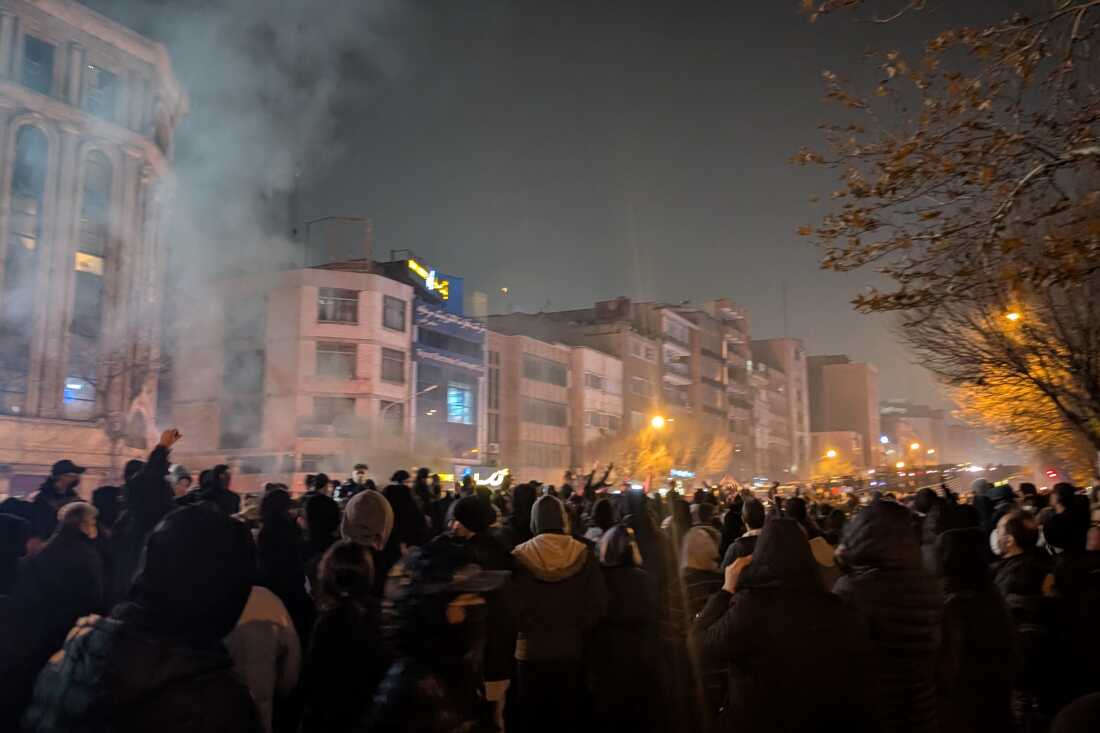
On December 28, 2025, protests began among bazaar traders and shopkeepers in Tehran amid a sharp depreciation of the rial. Within days, unrest spread to universities and provincial cities. Reuters described the crackdown as the bloodiest since the 1979 Islamic Revolution. Independent documentation remains scarce. A nationwide internet blackout was reported on January 8, 2026, substantially reducing independent reporting and complicating casualty accounting. On January 18, an Iranian official told Reuters that authorities had verified at least 5,000 deaths, including about 500 members of the security forces. Human rights organizations published lower confirmed figures and noted large numbers of cases under review. Other outlets reported substantially higher estimates based on sources that cannot be independently audited while access is constrained.
The divergence is not a technical footnote. In Iran’s current crisis, the politics of counting has become a primary arena in which legitimacy is asserted and contested—and this is not an accident of the moment, but a structural feature of how the Islamic Republic governs. Because it claims authority simultaneously from theocratic guardianship and republican procedure, the state cannot simply suppress its own violence. It must manage the moral register of killing: acknowledging enough death to appear in command, contesting enough to deny criminal culpability, and controlling information precisely at the threshold where visibility would become accountability. Each of the major protest waves since 1979 has reproduced this pattern, refining its techniques with each iteration.
This essay offers a historical frame rather than a definitive chronicle. It asks why cycles of protest and repression in Iran have taken recurring forms since 1979, and why casualty accounting repeatedly becomes a struggle over political authority. Two structural features organize the analysis. The first is institutional dualism—the coexistence of elected offices with unelected supervisory bodies that claim final authority. The second is coercive capacity, including surveillance and information control, and the readiness to deploy lethal force when unrest is framed as an existential threat. The expanding military conflict between the United States, Israel, and Iran has understandably dominated international attention. But the dynamics driving the current crisis and shaping the state’s response are rooted in features of the Islamic Republic that predate the present confrontation and will outlast it.
Institutional Dualism and the Problem of Sovereign Violence
Iran’s post-1979 political order blends republican procedures with theocratic oversight. Elections for parliament and the presidency exist, yet candidate eligibility and the boundaries of permissible policy remain subject to unelected institutions. The Guardian Council vets candidates and reviews legislation. The Supreme Leader holds commanding authority over the armed forces and security institutions, and his office sits above the elected executive in key domains. This architecture generates recurring legitimacy crises as citizens periodically test the republican promise through voting and public mobilization.
But the dual structure creates a specific vulnerability when the state uses mass violence. A purely authoritarian system can suppress, deny, and move on. The Islamic Republic cannot, because its republican elements generate a moral horizon against which killing is judged—by citizens, by reformist factions within the system, and by international interlocutors whose recognition the state actively courts. When repression becomes visible, it exposes the gap between constitutional form and coercive practice. State authorities therefore have a standing interest not only in using force but in managing its legibility: suppressing numbers, contesting causes of death, and controlling the information environment in which any accounting would occur.
Historians have traced this dual structure back to conflicts in the revolutionary period over the meaning of sovereignty. Ervand Abrahamian describes the constitutional moment as a struggle between clerical guardianship and conventional republican models, with revolutionary institutions rising alongside the provisional government to produce overlapping jurisdictions and rival claims to authority. The lasting result has been a system in which the question of who died, and why, and at whose order, is never politically neutral.
A further feature of the post-1979 order is ideological elasticity. In the late 1980s, Supreme Leader Ruhollah Khomeini advanced arguments framing state expediency as a principle capable of overriding other normative constraints, including those derived from religious law. This doctrinal flexibility has mattered in moments of crisis. It supplies a vocabulary for exceptional measures—narrowing legality and expanding discretionary power when unrest is framed as sedition or foreign-backed violence—while simultaneously providing cover for the claim that no real constitutional violation has occurred.
The first decade of the Islamic Republic paired institutional construction with violent consolidation. Revolutionary tribunals and new armed forces operated with sweeping authority especially after the Iran–Iraq War (1980–1988), which further centralized power within the Iranian military and normalized emergency governance. The decade culminated in the 1988 prison executions. Amnesty International and UN documentation characterized the killings as systematic and deliberately concealed, emphasizing that families have been denied both truth and remedy. The episode established the precedent that has structured every subsequent cycle: mass killing combined with secrecy, designed not merely to suppress but to foreclose any future accounting.
From Reconstruction to Reformist Challenge, 1989–2005
After the war and Khomeini’s death in 1989, political contestation expanded through a constrained but increasingly active civil society. The reformist surge associated with Mohammad Khatami’s 1997 presidential victory reintroduced public political language centered on civil society and rights. Known as the Second of Khordad, after the date of Khatami’s election in the Iranian calendar, the movement represented a renewed attempt to activate the republican elements of the system through elections and public debate—while the supervisory institutions retained veto power.
The July 1999 student protests exposed the limits of that opening. The immediate triggers included press restrictions and a police raid on a Tehran University dormitory. Human Rights Watch documented a violent crackdown, with abuses that signaled the security apparatus’ readiness to close political space when mobilization moved from debate into the street. What is equally significant is the state’s subsequent posture: official accounts minimized casualties, attributed violence to non-state actors, and worked to prevent sustained documentation. Accountability was not merely avoided; it was structurally foreclosed by the same institutions that carried out the suppression, illustrating how institutional dualism insulates coercive practice from constitutional remedy.
The Green Movement and the Limits of Electoral Contention, 2009
The 2009 Green Movement emerged from a dispute over electoral legitimacy after Mahmoud Ahmadinejad was declared the winner of the June 12 presidential election amid allegations of fraud. Supporters of Mir Hossein Mousavi and other opposition figures mobilized in Tehran and other cities. Slogans such as “Where is my vote?” condensed a core demand: that the system’s republican promise be honored against the supervisory power of unelected bodies. At its height, demonstrations reached into the hundreds of thousands.
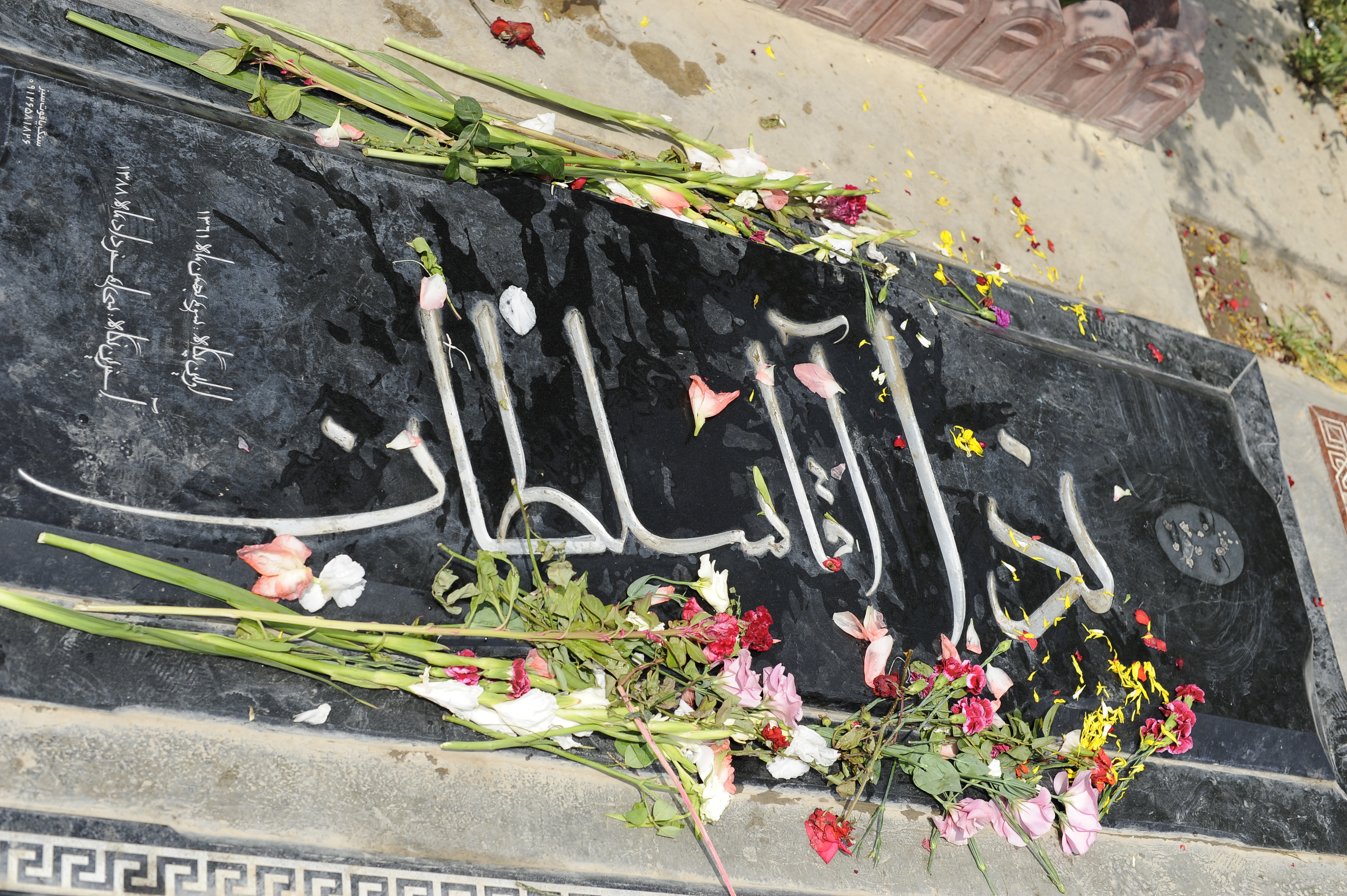
The killing of Neda Agha-Soltan on June 20, 2009, captured on video, became an emblem of state violence—and something more specific than that. Her death, circulating globally within hours, was a direct inversion of the state’s information management strategy. The regime’s standard operating procedure was to make violence deniable by controlling its documentation; Neda’s death was documented before it could be suppressed, turning a single casualty into an irrefutable public record. The state’s subsequent attempts to dispute the circumstances of her death, attributing it variously to the CIA, the BBC, and internal opposition elements, illustrated how deeply the politics of counting penetrates even individual cases. Contesting who killed Neda was a form of legitimacy work.
Human Rights Watch and other organizations reported lethal force, mass arrests, and credible reports of torture and sexual violence in detention. Mobilization persisted into late 2009 and early 2010 as protesters repurposed public rituals—Quds Day, Ashura—as vehicles for dissent. The movement’s suppression reinforced the pattern visible since 1999: elections produce mobilization; unelected security institutions reassert control through coercion; and the moral residue of that coercion is managed through official narrative, not accountability. Yet even under repression, the Green Movement circulated symbols and repertoires that later waves would adapt—its visual language, its claims about electoral dignity, and its insistence on public witnessing. Protest, across these cycles, accumulates as an archive of moral claims that outlasts any single mobilization.
From Class Grievance to Nationwide Revolt, 2017–2019
By the late 2010s, protest waves increasingly reflected socioeconomic crisis. In December 2017 and January 2018, demonstrations began in Mashhad and spread to dozens of cities, driven by anger over prices and corruption. Commentary at the time noted a stronger presence of provincial cities and lower-income participants than in 2009, with slogans targeting the political order rather than a single electoral outcome.
The November 2019 fuel protests escalated this trajectory. On November 15, the government announced sharp gasoline price increases—for purchases beyond a monthly quota, the price rose from 10,000 to 30,000 rials per liter, a 200 percent increase. Protests spread to more than one hundred cities and towns. Alongside the violence, Iranian authorities imposed a near-total internet shutdown. International connectivity was disrupted for approximately a week.
The casualty figures from 2019 follow a revealing arc. During the crackdown, official statements were sparse and denials were routine. Only later did Reuters report, drawing on interior ministry sources, that the death toll stood at approximately 1,500—a figure that emerged not through official disclosure but through a document leak. The gap between the killing and its partial acknowledgment is itself the evidence: the Islamic Republic’s information management strategy is not merely to deny violence in the moment but to ensure that any reckoning is deferred until its political consequences can be absorbed or foreclosed. The 2019 episode thus provides not only a direct precedent for the 2026 internet shutdown but a model for the temporal politics of casualty accounting.
“Woman, Life, Freedom” and the Language of Rights, 2022–2023
The 2022 uprising opened a related legitimacy crisis centered on bodily autonomy and gender. Mahsa (Jina) Amini, a 22-year-old Kurdish-Iranian woman, was arrested by Iran’s morality police on September 13, 2022, for alleged violations of hijab rules. She died in custody on September 16, and the UN later attributed her death to physical violence sustained in detention. Protests spread nationwide, with women and girls playing leading roles. Civil society reporting documented killings, mass arrests, and abuses in detention, including sexual violence allegations.
In November 2022, the UN Human Rights Council created an Independent International Fact-Finding Mission on Iran, which concluded in March 2024 that the crackdown involved serious violations and potential crimes against humanity, including murder, torture, and rape. The Fact-Finding Mission is significant not only for its findings, but for what its existence represents: an internationally institutionalized form of casualty accounting, operating outside Iranian jurisdiction, that the state could neither control nor simply dismiss. The Islamic Republic’s response—disputing findings, denying access, insisting on sovereignty—was, again, legitimacy work. To contest how Mahsa Amini died, or how many protesters were killed, was to contest the terms on which the regime could be judged.
The 2025–26 Protests and Mass Violence
Acute economic breakdown and currency collapse triggered the most recent wave of protests. Reporting traced early mobilization to commercial districts and bazaar closures in Tehran, before unrest spread to universities and provincial cities. Iranian officials framed the unrest as foreign-backed violence, a recurrent strategy that performs two functions simultaneously: it expands the permissible scope of repression by classifying protesters as enemy agents rather than citizens, and it reframes any subsequent casualty count as a tally of combatants rather than a record of state violence against its own people.
The scale of killing remains contested. Reuters reported an official statement that at least 5,000 deaths had been verified, including around 500 security personnel. HRANA figures for confirmed deaths and arrests were reported by the Associated Press, which also noted that Supreme Leader Ali Khamenei publicly acknowledged “several thousand” deaths. Media outlets have published higher estimates, including figures reported by CBS based on sources in Iran and activist networks. The evidentiary status of these estimates varies, and the rolling internet blackouts severely limit verification. What is clearly evidenced is mass killing and a large-scale detention campaign; the precise mortality figure remains uncertain, and that uncertainty is, in part, manufactured.
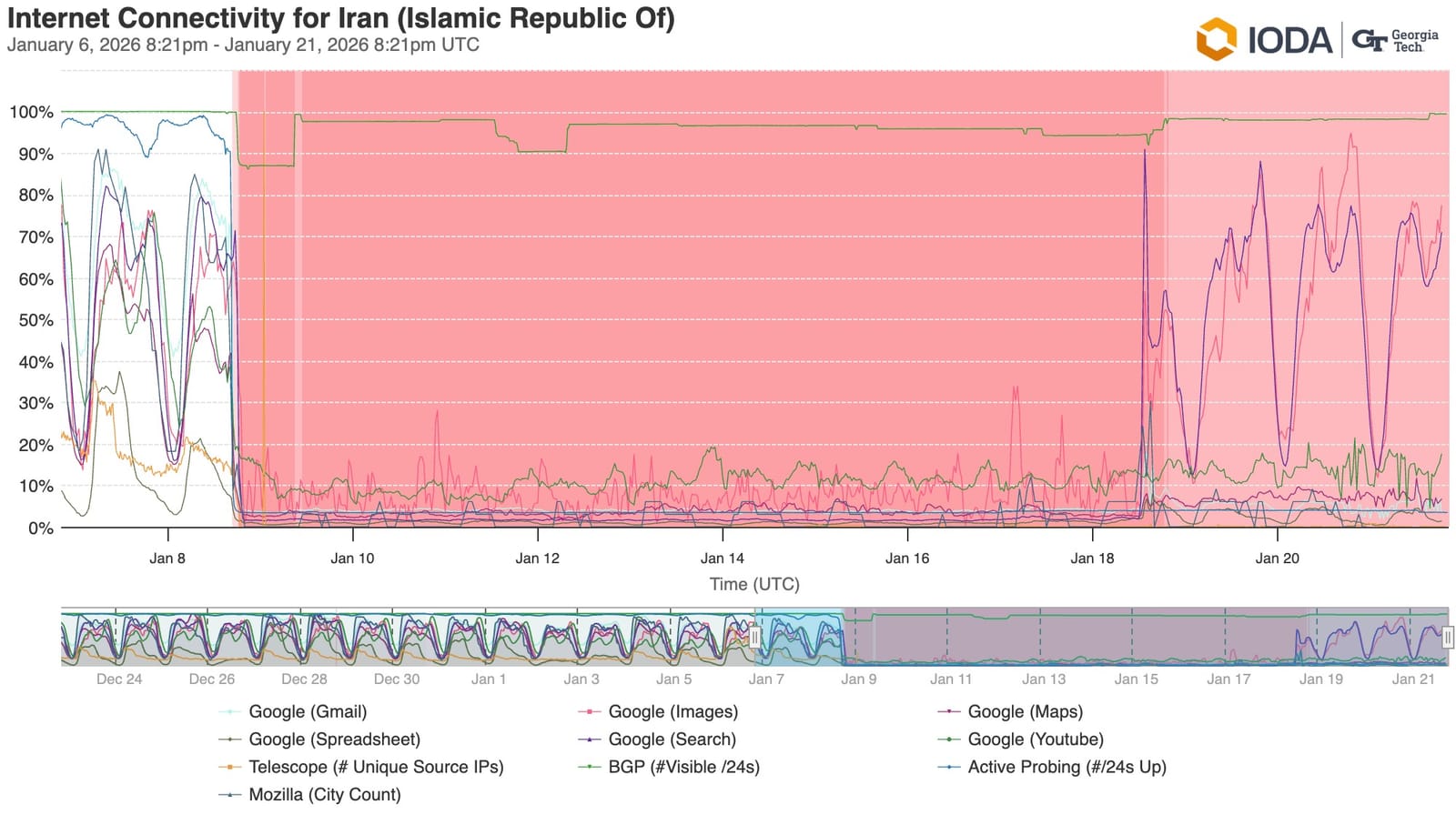
The recurring use of communications shutdowns should be understood as a technique of spatial and political fragmentation, not only a tactical measure. Its operational logic is to isolate crowds from each other, isolate cities from outside scrutiny, weaken coordination across sites of protest, and obstruct documentation that might later anchor legal or historical claims. The blackout makes violence deniable, and deniability is not the absence of accountability, it is a form of its suppression. In historical perspective, this extends the precedent set in 1988 and elaborated in 2019 through contemporary infrastructures of digital surveillance and communications shutdown. Each cycle has expanded the technical repertoire for making killing legible enough to assert control while illegible enough to resist reckoning.
International Response and the Limits of Reputational Cost
Mass atrocity imposes reputational costs on a state that claims both revolutionary legitimacy and sovereign normalcy—and it is the structure of that claim, not the violence alone, that makes international condemnation politically meaningful. The Islamic Republic has always maintained that its system is both theocratically legitimate and recognized within the international state system; to be named a perpetrator of crimes against humanity is to be expelled, partially, from the latter. This is why the state’s response to international censure mirrors its response to domestic casualty accounting: contest the methodology, dispute the authority of the accounting body, and insist on sovereign exception.
The international response to the 2025–26 violence has combined rhetorical condemnation with targeted diplomatic and economic measures. Reuters reported that the Munich Security Conference withdrew an invitation to Iran’s foreign minister. The UN Security Council held a meeting on the violence, though diplomatic divisions limited outcomes. The United States announced sanctions related to the crackdown, and European institutions debated and adopted additional measures. These steps have not produced near-term accountability. But they register reputational costs that accumulate and that the Islamic Republic, despite its posture of indifference, demonstrably works to manage through narrative contestation and careful calibration of what it acknowledges.
After the Crackdown: February and the Limits of Managed Legitimacy
The regime’s attempt to restore normalcy after January exposed the contradictions of its position with unusual clarity. On February 11—the anniversary of the Islamic Revolution—President Masoud Pezeshkian publicly apologized to the nation for the crackdown, acknowledged “the constitutional right of peaceful protest,” and promised to meet with protest representatives. The apology was a remarkable statement, and its limits were equally remarkable: Pezeshkian’s office had no command authority over the security forces that had carried out the killing. The elected executive was performing accountability for violence it had not ordered and could not have prevented. This is institutional dualism operating at its most exposed: the republican face of the system absorbing moral costs for decisions made by institutions that answer to no republican procedure.
The apology did not suppress a second wave. On February 21, students at multiple universities initiated a renewed round of protests. The January crackdown had been devastating by any measure, but it had not restored the regime’s authority over the populations most willing to contest it. The second wave was smaller and more concentrated in university settings than the January uprising, but its emergence confirmed what the casualty figures alone could not: that the scale of killing had failed to produce the political outcome the regime required. Fear and exhaustion are not the same thing as legitimacy. The Islamic Republic had spent enormous coercive capital and emerged with a deeper deficit of authority than it had entered with.
It was in this context—a regime that had just killed thousands, whose president had apologized for doing so, and whose legitimacy was visibly collapsing—that external military intervention arrived. On February 28, the United States and Israel launched coordinated joint strikes on Iran, targeting military infrastructure, nuclear facilities, and regime leadership. The strikes killed Supreme Leader Ali Khamenei, along with the army chief of staff, the defense minister, and multiple senior IRGC commanders. Iran declared forty days of mourning and launched retaliatory strikes across the region. An Interim Leadership Council was formed on March 1. The conflict is ongoing.
The historical argument this essay has advanced—that cycles of protest and repression in the Islamic Republic are structured by the interaction of institutional dualism and coercive capacity, and that casualty accounting becomes a fight over legitimacy precisely because the regime must be legible to both its citizens and the international community—retains its analytical purchase even now. Recent events do not refute that framework. In a significant sense, they confirm it. The Islamic Republic’s legitimacy was not destroyed by the January crackdown. Its legitimacy had been eroding for decades, through the 1988 executions, the 1999 dormitory raid, the 2009 suppression, the 2019 massacre, the Mahsa Amini killing, and now the January 2026 killings, each episode adding to what this essay has called the cumulative archive of moral claims against the state.
The February 28 strikes, whatever their stated rationale, constitute a violation of international law—unilateral uses of force against a sovereign state, conducted without UN Security Council authorization, that the UN Secretary-General rightly condemned. That the Islamic Republic had forfeited much of its domestic and international legitimacy through decades of violence against its own people supplies no legal or moral warrant for military intervention. Both condemnations stand independently: the regime’s mass killing of protesters, and the decision by the United States and Israel to launch strikes that have now killed civilians and destabilized a country whose population was already paying an enormous price for its resistance. The point of the historical framework developed here is precisely that external military force operates on a different register of accountability than internal state violence—and that conflating the two, or treating one as justification for the other, forecloses the very accountability processes that the Iranian people have been demanding.
Earlier drafts of this essay assumed a continuing Islamic Republic managing its position through information control, calibrated repression, and narrative contestation. That assumption cannot be made with confidence today. Khamenei is dead. The succession question is unresolved and, given the decapitation of much of the IRGC’s senior leadership, structurally precarious. The Interim Leadership Council faces a military conflict and a domestic population whose relationship to the regime has been transformed by the January killings. Whether what emerges is a successor Islamic Republic, a transitional government, or something more chaotic is genuinely unknown.
What the historical frame does clarify, even under these conditions, is what is at stake in the documentation work that continues. The contested casualty figures from January remain politically and legally consequential regardless of what form of government eventually controls Iranian territory. The 1988 executions were deliberately buried for decades; their partial emergence has nonetheless shaped every subsequent legitimacy contest within the Islamic Republic. The January 2026 killings were larger and more globally witnessed than anything that preceded it. Whatever comes next in Iran, the record of what happened in January will be a political resource for survivors and for transitional justice processes. The urgent work of verification and accountability is not rendered moot by military intervention. It becomes, if anything, more consequential: the foundation for any legitimate successor order’s reckoning with what was done.
The present moment is one in which historical analysis can clarify the stakes without resolving the outcome. This essay has argued that the Islamic Republic’s specific constitutional architecture made the moral legibility of its violence a permanent site of struggle. That struggle did not end on February 28. It has entered a new and more dangerous phase, whose consequences for the Iranian people—and for the accountability of those who killed them—remain entirely open.
Featured Photo: Iranian protesters gather on Enghelab (Revolution) Street during a demonstration in Tehran, Iran, on Jan. 8, 2026. Sohrab/Middle East Images / AFP via Getty Images
 Clio and the Contemporary

Leave a comment