Even well-intentioned efforts at historical reckoning can reproduce epistemic harm when they rely on unexamined disciplinary assumptions.
The Supreme Court’s Not-So-Uniquely Conservative Term
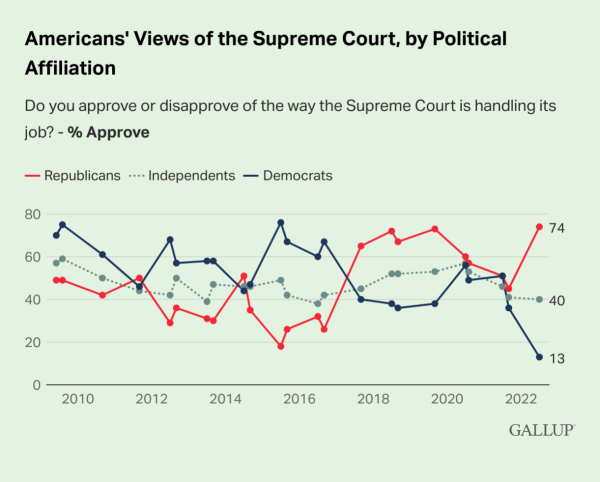
The United States has almost always been a very politically divided nation. Conservative majorities on the Supreme Court are mistakenly viewed as unique to recent years, but they are really the norm in American history. So too is political polarization the norm.
Engaging Different Communities of Stakeholders at James Monroe’s Highland
Working at a public history site is a reminder that no community is monolithic or similar-minded. Even at James Monroe's Highland more localized communities are composed of diverse needs, questions, and missions.
Legislative & Public Policy Research for Local Government
The historian's training prepares them for diverse career paths, but departments must better relate the component skills of historical research to the responsibilities of non-academic professions.
Reinterpreting James Monroe’s Highland
We are always learning new things about the past, and that's good. As we learn more, we are also obligated to share these new discoveries to our public. That is currently what we are doing at James Monroe's Highland: telling new, more truthful stories about a place with a complicated historical and institutional history.
Business of History—Syllabus
The Business of History syllabus challenges students to merge the often creative, open-ended nature of academic inquiry with the outcomes-oriented and deadline-driven world of business.
Global Human Rights and Memory in the Public History Classroom
Teaching about historical and public memory should challenge students to think and interpret outside the classroom. This course empowered students to serve as producers of their own sites of memory.
HIST 211: Post-1945 United States Memory and Human Rights—Syllabus
This course explores historical "happenings" and their interpretations after 1945 with a heightened focus on if/how the United States has maintained, strengthened, and perpetuated its image of global excellence.
Should I Write an Op-Ed?
If you’re seeking to write to broader audiences, op-eds can be an effective way to draw on your skills as a historian to discuss the present-day implications of your research, historicize contemporary issues, and spotlight the concerns of those in your community.
Year in Review: The Top Public, Scholarly Pieces of 2022
2022 saw outstanding public scholarship. Each week, Ben Railton shared the week's best public scholarship in his #ScholarSunday threads. This year-end list highlights 30 of the year's top pieces.