What can Mrs. America tell us about the historical context of the battle over the Equal Rights Amendment? Where does it shine and where does it fall short? And what should we take away from the show, and its real history, to better understand our present?
Unjust Laws and the Movement for Black Lives: A Historical Perspective
The parallels between the civil rights movement of the early 1960s and the 2020 uprising can situate Gov. DeSantis’s proposal in a broader context. Many of the legislative efforts to curtail Black Lives Matter demonstrations parallel efforts made to criminalize nonviolent actions led by Dr. Martin Luther King, Jr.
Small Acts of Storytelling: Why We Need More History
College students are taking fewer history classes than ever before. The consequences have implications not just for our collective knowledge about the past, but also for our ability to make sense of the present.
Of Plagues and Papers: COVID-19, the Media, and the Construction of American Disease History
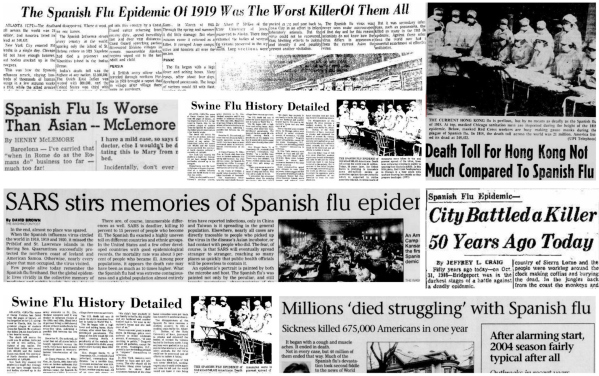
In their attempts to make sense of the novel coronavirus, media outlets frequently invoke the past, comparing COVID-19 to the Black Death, the "Great Influenza" of 1918-19, and other historical disease outbreaks. The act of connecting "then" and "now" has produced two countervailing historical narratives: one that emphasizes medical progress over time, and another that highlights America's failure to learn the lessons of past pandemics.
Public History and Dark Tourism
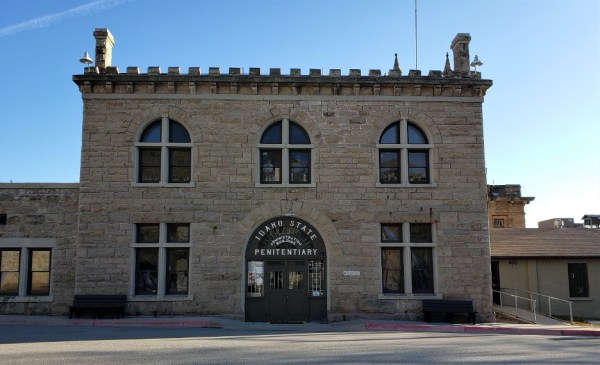
This article looks at what it’s like to work at a dark tourism destination, in this case the Old Idaho Penitentiary. From a public history perspective, it details the challenges of practicing history responsibly, while also catering to visitor demand for paranormal programming such as macabre prison stories. Ultimately, lucrative paranormal investigations allow for more historically based, educational programming that may not be as popular, but fulfills the site’s mission of informing the public of Idaho and prison history.
Teaching in a Time of Pandemic: Distance Teaching Resources for Historians
When navigating an exceptionally demanding moment for history educators, the simplest tools are the best.
Teaching Writing Efficiently: Strategies for the Early-career Historian
By making writing a centerpiece of teaching history, time spent preparing for class functions in service of, rather than in competition with, one's own writing projects.
HUMN 222: Black Humanities: The New York Times 1619 Project – Syllabus
HUMN 222 takes on The New York Times challenge to reframe American history, to consider the possibility that the origin of this country can be traced to 1619, the year that marks the arrival of the first Africans (from the land that would become Angola) to the land that would become America in all its defining contradictions.
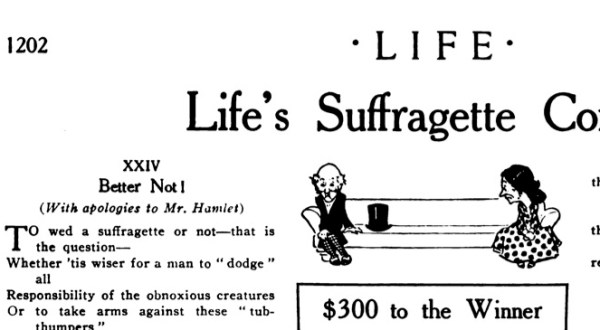
No Valentines for Women’s Rights: Why No Man Should Marry a Suffragist
Life Magazine Promises “$300 to the Winner” Throughout the fall and winter of 1910, Life magazine called upon readers to submit three hundred-word manuscripts to their New York office. Each issue of the magazine would contain a selection of the best submissions and, in early 1911, the editors would declare a winner. That author would receive $300—equivalent... Continue Reading →
Why LGBTQIA+ History Needs to be Part of “The History”
LGBTQIA+ history deserves a place in the modern K-12 curriculum. This piece includes a rationale and resources for educators working to make their courses more inclusive by incorporating LGBTQIA+ voices.