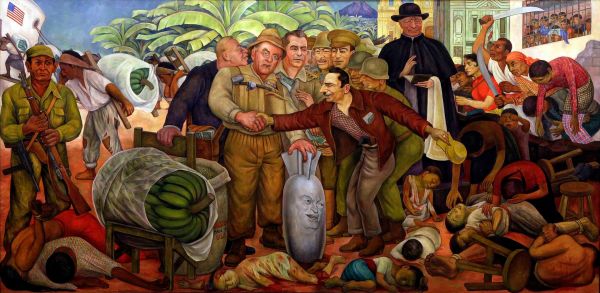
While the history of Cold War intervention rightly shapes international responses to Nicolás Maduro’s kidnapping, the emphases of US policymakers today are more in line with those of the early 20th century, especially the aftermath of Cuban independence from Spain and President Wilson’s occupation of Haiti.
History of Indoctrination in the United States and Florida—Syllabus
In 2023, UF president Dr. Ben Sasse called for "less indoctrination" of students by their professors. This course explores the historical debates over indoctrination to understand how such undue influences may have threatened or seemed to threaten freedom of thought, personal autonomy, and self-determination—the touchstones of liberal democracy.
“Are you now or have you ever been a member of the Tom Hanks fan club?”: Modern McCarthyism in America
Recent attacks on Tom Hanks and American universities highlight parallels between 2025 and the McCarthy era. But our moment has something the Cold War Red Scare didn't: the benefits of hindsight and mass resistance.
Noir City vs. The Opera on the Turnpike: As Bruce Springsteen’s Born to Run Turns 50, Its Most Underrated Track Deserves Some Love
"Meeting Across the River" routinely lands last when fans rank their Born to Run favorites. But its noir mood was where the country was heading in the mid-1970s.
The Industry that Stayed: How Meatpacking Remained Domestic
As the Trump administration calls for the return of domestic manufacturing, there is one industry that managed to resist the outsourcing process of the late 20th century. It only required the destruction of its labor unions.
The First 100 Days of Trump 2.0: A Foreign Policy Assessment
The first 100 days of President Trump's second term marks a departure from established US foreign policy, focusing on dismantling international aid and agreements. His administration’s actions, including cuts to USAID and skepticism toward NATO, jeopardize global partnerships. Trump's approach favors unilateralism and transactional relations over multilateral cooperation, risking America's leadership and security in an increasingly authoritarian world.
Game Schedule—After a Long Battle: Congressional Response to the AIDS Epidemic, 1982–1985
See how to schedule and organize a Reacting to the Past Game, with examples from After a Long Battle: Congressional Responses to the AIDS Epidemic, 1982-1985.
History of Illness and Medicine in America: Pandemics—Syllabus
This course surveys the history of illness and medicine in the US with a focus on viral pandemics, the developments of treatments and prevention, and the experiences of patients, families, medical professionals, researchers, activists, and politicians.
Reacting to the Past: Using Historical Games in College Classrooms
Interested in adding a historical game to your history class but don't know where to start? Adding a Reacting to the Past game can be a great way to engage students and delve into specific historical events.
The History of Hip-Hop Culture in America—Syllabus
This course traces hip hop culture's emergence and development in the United States and globally from the 1970s to the present. With a strong emphasis on rap music, the course investigates the culture's intersections with local, urban, and regional histories, as well as technology, politics, capitalism, race, gender, sexuality, and class.