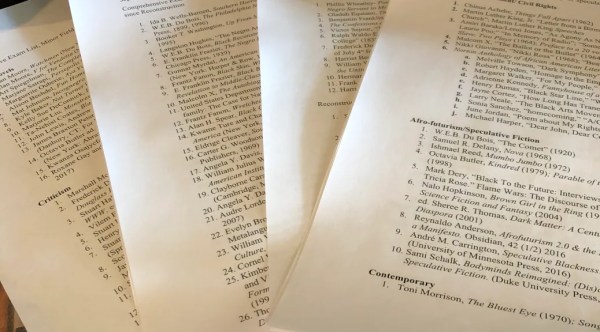
While most graduate students focus on the labor of reading for comps, compiling the reading lists themselves takes time and reflection. Be strategic and minimize your workload, but also be aspirational by considering the themes you want your future dissertation to explore.
Written & Oral Comps
The written and oral portions of your comprehensive exams may seem daunting, but try to remember that when you get to this step you are ready.
From the Comprehensive Exam to the Prospectus Defense: Using Comps as a Roadmap for the Prospectus
When you’re getting ready to draft your dissertation prospectus, your comprehensive exams can be a helpful tool. Here’s some advice on how to use your comps for a great prospectus.
Reading, Remembering, and Reorienting for Comprehensive Exams
Comprehensive exams are less about recalling every detail of every book than about building a durable system of arguments, interventions, and stakes. Read with precision, take structured notes, test your memory, and lean on community—the process is as much formation as it is evaluation.
What are Comps?
Comprehensive Exams, or 'Comps,' can be confusing and intimidating for graduate students, but the first step to conquering Comps, and the fear they elicit, is to understand what they are, what they are designed to test, and how they work.