This course explores historical "happenings" and their interpretations after 1945 with a heightened focus on if/how the United States has maintained, strengthened, and perpetuated its image of global excellence.
America in the 1990s—Syllabus
This course traces the history of the United States during the 1990s. It pays particular attention to the politics of the era, as well as the cultural texts (songs, films, and other phenomena) that both reflected and shaped the period.
How to use ChatGPT in the history classroom
Historians shouldn’t ban ChatGPT from the classroom—we should embrace it.
Should I Write an Op-Ed?
If you’re seeking to write to broader audiences, op-eds can be an effective way to draw on your skills as a historian to discuss the present-day implications of your research, historicize contemporary issues, and spotlight the concerns of those in your community.
History of Emotions & Senses—Syllabus
This course introduces students to the history of emotions and senses. Students explore theories and methods for studying emotions in history, as well as scholarship on emotions or senses in specific historical contexts.
Year in Review: The Top Public, Scholarly Pieces of 2022
2022 saw outstanding public scholarship. Each week, Ben Railton shared the week's best public scholarship in his #ScholarSunday threads. This year-end list highlights 30 of the year's top pieces.
“Our war of independence”: President Zelensky’s Speech to Congress and the Memory of the American Revolutionary War
With well-chosen references to and evocations of the memory of the American Revolutionary War, President Zelensky connected the American and Ukrainian struggles for independence.
Every flute its Lizzo, Every Lizzo her flute.
What do the reactions to Lizzo's September 2022 visit to the National Archive say about access to public services? We have work to do if we want to keep saying libraries are welcoming spaces, and a radical librarian from the 1930s gives us a place to start.
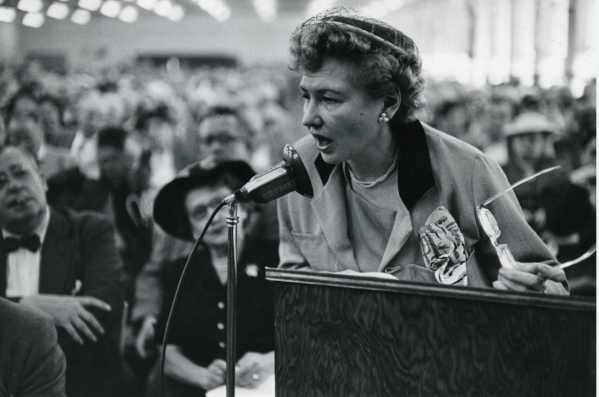
“Stockholders Have Civil Rights, Too”
Wilma Soss emerged from the midcentury zeitgeist because she had the right experience and contacts to champion stockholder rights.
Extremism in the United States: From the Ku Klux Klan to January 6—Syllabus
This course provides a historical overview of extremism in the United States from Reconstruction through the present. Students will explore primary sources ranging from political pamphlets to diaries, religious tracts, government records, and films, alongside scholarly literature, to equip them with a foundational knowledge of the history of extremism in the US during the long twentieth century.