Ever since OpenAI unleashed its generative artificial intelligence chatbot, ChatGPT, on an unwitting world in the fall of 2022, the beginning of a new academic year has meant a fresh round of syllabus revisions as faculty, particularly those of us in writing-intensive humanities disciplines, struggle to craft course policies that can accommodate this new normal. While I am certainly no luddite, I do worry that technologies like ChatGPT have made what effectively amounts to cheating so frictionless and normalized that even my most honorable and committed students will find the siren song of the path of least resistance impossible to ignore.
This worry has led me to adopt a strict zero-tolerance policy for the use of AI on any assignment. I enforce this policy through a combination of the (admittedly imperfect) online plagiarism detector to which my college subscribes, my own instincts and intuitions honed over more than a decade of reading and evaluating undergraduate essays, and a heaping portion of good ol’ fashioned shame. (In my experience, most students would rather confess to cheating and face the consequences than wither under the glare of a respected adult’s countenance radiating disappointment.) I also encourage compliance with this policy by explaining to students the pedagogical motivations behind it. To get at the “why” behind my “abstinence-only” approach to AI, I do the following:
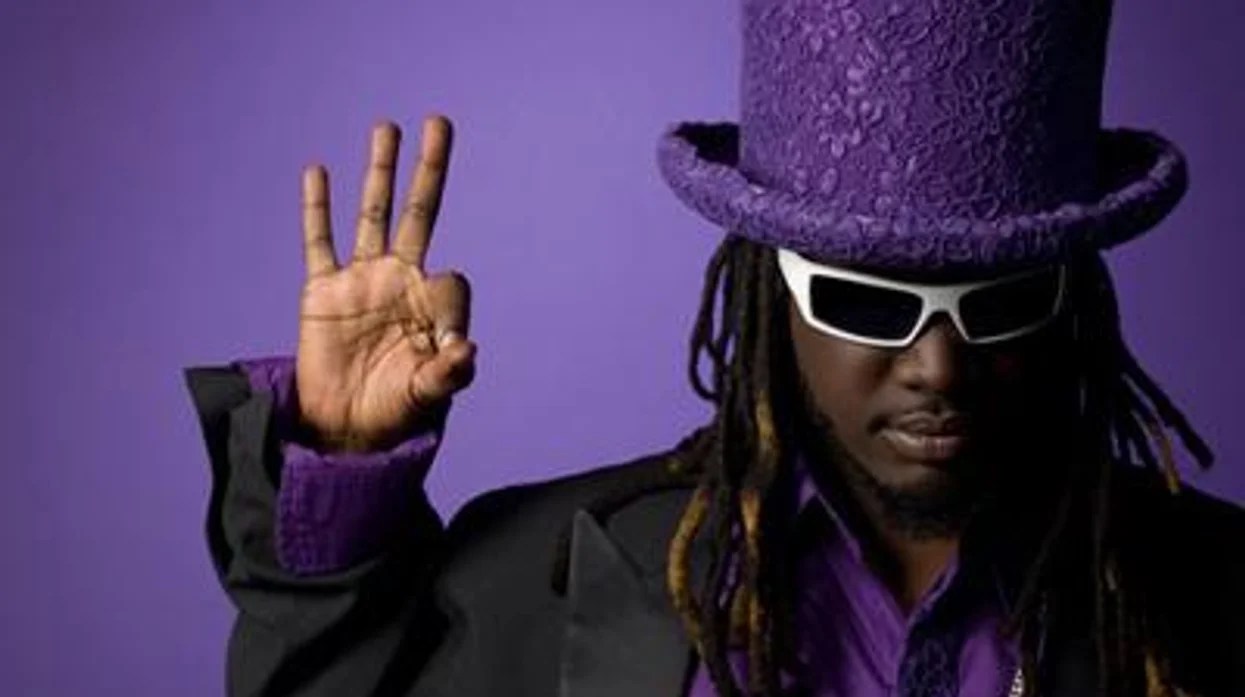
I start by playing my students the first minute or two of T-Pain’s 2007 smash hit “Buy U A Drank (Shawty Snappin’).” I introduce the clip by offering a little context so my primarily 18–21-year-old Gen Z students—who were born around the time my elder millennial friends and I were “poppin’ bottles in da club” to this song—can understand T-Pain’s pioneering, polarizing, and era-defining use of Auto-Tune. This piece of audio processing software was still relatively new in the early 2000s when T-Pain first experimented with it in his studio. Its intended use was pitch-correcting errors in vocal tracks, but T-Pain was among a small number of visionary artists and producers at this time who sensed Auto-Tune’s potential for something more. T-Pain’s most notable musical innovation, which is readily apparent on a track like “Buy U A Drank (Shawty Snappin’),” was to use Auto-Tune not to paper over mistakes or compensate for a lack of natural ability, but for stylistic reasons—to lend his voice a futuristic quality somewhat akin to the sound achieved by artists in the 1970s, ’80s, and ’90s who used the vocoder or talk box. Other artists, most notably Cher on her 1998 mega hit “Believe,” had experimented with Auto-Tune for more than simple pitch-correction; yet it was the vocal sound T-Pain achieved in the mid-2000s that became iconic, giving rise to a legion of imitators, including some of hip-hop’s most celebrated emcees like Kanye West and Snoop Dogg, as well as prominent detractors. For example, in 2009, rap titan Jay-Z released a single entitled “D.O.A. (Death of Auto-Tune)” which included the lyrics, “You ni**as singing too much/ Get back to rap, you T-Paining too much.”
After exposing my students to the studio version of “Buy U A Drank (Shawty Snappin’)” and letting them soak in the sound and feel of all that was mid-2000s T-Pain, I shift gears to play them a second, far less well-known version of this same song. In 2014, to mark the release of his first greatest hits album, T-Pain Presents Happy Hour: The Greatest Hits (2014), T-Pain performed “Buy U A Drank (Shawty Snappin’)” live as part of NPR’s Tiny Desk Concerts series. In this version, T-Pain is accompanied only by a pianist and his vocal is left completely raw, unembellished by the kinds of digital manipulations that had, by that point, become his artistic signature. In an interview with NPR’s All Things Considered accompanying his Tiny Desk Concerts appearance, T-Pain spoke to his motivation for accepting NPR’s invitation to perform as part of its largely acoustic concert series: “People felt like I was using [Auto-Tune] to sound good. But I was just using it to sound different.” T-Pain’s stunning, stripped-down vocal performance on the Tiny Desk version of “Buy U A Drank (Shawty Snappin’)” makes it clear that his suite of digital audio tools needs T-Pain far more than T-Pain needs his suite of digital audio tools; there is no doubt he’s got the organic vocal chops to “sound good” without any digital assistance.
Having presented students with these two clips showcasing the stylistic range and indisputable musical talent of T-Pain, I emphasize the take-away: an artist like T-Pain is able to use technology like Auto-Tune artistically and creatively because he knows how to compose and sing without any technological assistance. What we’re doing in classes like this one is learning how to read, write, and think with minimal technological mediation because these foundational skills and capacities are what enable us to use AI or whatever the paradigm-shattering technology de jure happens to be constructively and creatively in the service of humane ends.
What I hope students glean from my T-Pain object lesson is not some hidebound defense of the “old ways” rooted in complacency, misguided nostalgia, or an anti-intellectual allergy to the new. As students who take my introductory courses in the history of political thought know all too well, I harbor no reverence for the “rust of antiquity” simply on account of its being old and I’m far more Team Mary Wollstonecraft than Team Edmund Burke. What I do harbor something bordering on reverence for, however, are human faculties that have been honed to such a hard and sharp cutting edge that they can slice through the jungles of vacuity and vapidity that threaten to envelop us in every age to make art, beauty, and meaning instead of just more bullshit. Cultivating this creative capacity requires us to, at least temporarily, eschew the use of tools like AI as we learn the affordances and limitations of our own distinctively human capacities. Once we know what our own voices are capable of, we can start exploring what various technologies might do to expand, enhance, or embellish our creative endeavors. But you can’t have the cyborg swag of 2007 T-Pain without first learning the fundamentals of harmony and rhythm and the only way to do that is by setting aside the Auto-Tune and singing for yourself.
Featured Image Credit: Jase Peeples, “T-Pain Breaks it Down for ‘All Homophobic Idiots.” The Advocate. April 20, 2013.
 Clio and the Contemporary
Leave a comment