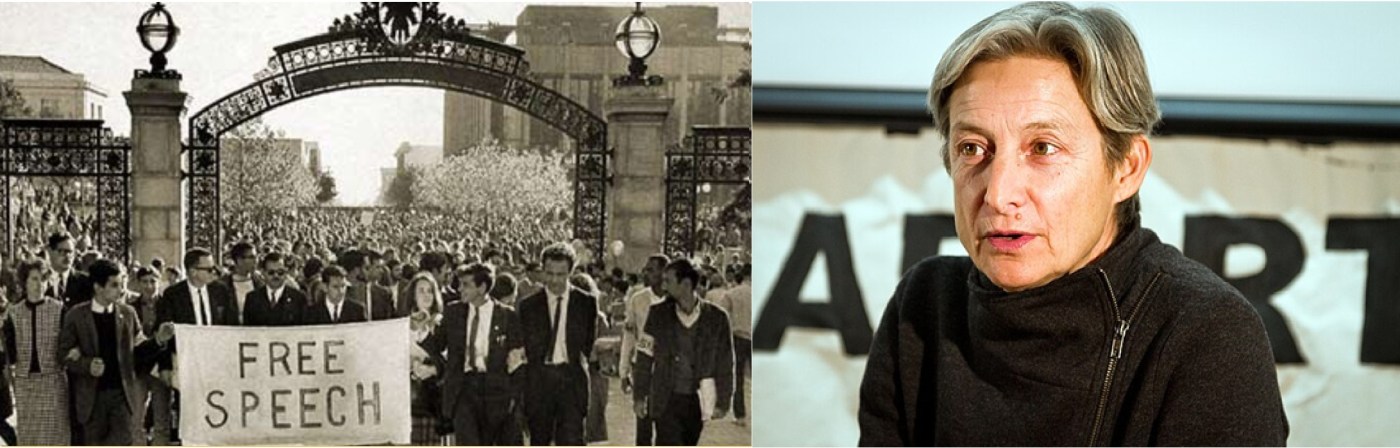
McCarthyism is back in America. Two key events last week exemplify the worst of the McCarthy era’s return—an attack on a prominent Hollywood actor and a sustained challenge to academic freedom. This time, however, one glaring difference has allowed the McCarthyism redux to operate with seeming impunity: instead of a senator instigating the cultural climate of fear and suspicion, the man at the center is the president himself.
Using a similar playbook of intimidation and allegations, the Trump administration has exceeded the limits of the Cold War Red Scare. A key component since January has been the litany of Executive Orders (EOs), which the administration and its allies in the media construe as laws of the land rather than what Executive Orders (by definition) are—directives for the federal government. President Truman’s Executive Order 9835, aka the Loyalty Order, outlined procedures for investigations of all Executive Branch employees and applicants; this laid some of the groundwork for McCarthy’s completely baseless attacks on the State Department in 1950. Yet, Trump’s EOs have gone much further.
Executive Orders from just the first ten days of Trump’s second term include demands for ideological loyalty from government employees under the guise of “accountability,” adherence to a narrow definition of gender, and prohibitions against “radical indoctrination in K-12 schooling.” These EOs represent, respectively, a renewal of attacks on government employees, revitalized state-sanctioned distrust of LGBTQ+ Americans, and revamped paranoia over “indoctrination” of children in public schools. In the eight months since then, echoes of McCarthyism have contributed to a growing culture of both fear and resistance, not only in response to EOs, but also violent actions, ranging from illegal detentions and deportations of both immigrants and US citizens to the illegal mobilization of the National Guard against US cities. The massive efforts of the federal government to legitimize Trump’s attacks on institutions and individuals based on their identities or political ideologies constitute escalations beyond mid-century McCarthyism.
In both the Cold War Red Scare and today’s sequel, culture has been key to gaining public support for escalations that trample civil liberties. Both movements have relied on nebulous philosophies used as catchalls for political, social, cultural, and ideological views— McCarthy’s “communism” and Trump’s “woke”. “Communism” served to delegitimize Americans who challenged the heteronormative, white capitalist status quo, while “woke” has similarly served as a weapon that can be wielded against anyone who could potentially threaten a white, male, Western world order.
While Trump’s efforts to reshape American culture have gained traction over many years—owing in part to Fox News’s willingness to fight small battles over things like the de-sexualization of candy—but he is now trying to win the culture war. In recent months, Trump has seized control of the Kennedy Center for Performing Arts, called for a review of the Smithsonian Institution for “improper ideology,” pressured into resignation the director of the National Portrait Gallery, and fired Carla Hayden, Librarian of Congress. These power grabs are matched by his all-out offensive against universities described by McCarthyism expert Ellen Schrecker as “immeasurably worse than McCarthyism,” due to the scale and scope of the current federal government’s attacks. Combined, we have seen the Trump administration target the foundations of critical thought by undermining both education and cultural history via federally-connected, or funded, institutions.
As Trump seeks to control the education and cultural sectors, two events last week signaled another escalation parallel to McCarthyism—first, an attack on beloved actor Tom Hanks, and second, a catastrophic blow to academic freedom.
Capturing Hearts and Minds
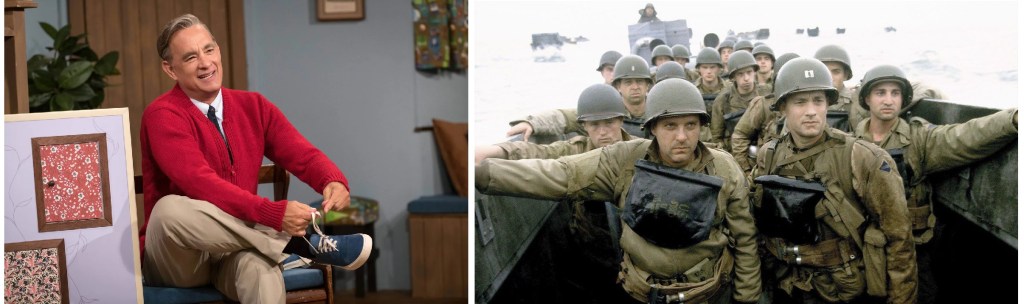
An astronaut, an Army Captain, an FBI agent, an icon of late-20th century Americana, and Mister Rogers are only a fraction of the uniquely American roles Tom Hanks has portrayed in his five-decade career in Hollywood. Across these roles and the many additional US-themed projects he has produced, Hanks has had a prolific career that includes popular representations of history and, many of them centered on the US military. In addition to his roles in films such as Saving Private Ryan (1998) and Greyhound (2020) where he portrayed US military leaders, Hanks has also served as an ambassador and advocate for memorializing and supporting veterans and their families. In June, the West Point Association of Graduates announced that Hanks would be the recipient of the 2025 Sylvanus Thayer Award, an annual award established in 1958 recognizing “an outstanding citizen of the United States whose service and accomplishments in the national interest exemplify personal devotion to the ideals expressed in West Point’s motto: ‘Duty, Honor, Country.’” For undisclosed reasons, early last week, the association’s president, Col. Mark Bieger, cancelled the event, a decision that pleased Donald Trump, who subsequently used a social media post to call Hanks “destructive” and “WOKE”.
It seems the president decided to attack Hanks because he has been a vocal Democrat and a critic of Trump, having once called him a “self-involved gasbag.” Trump is no stranger to launching petty attacks against celebrities who disagree with him. For instance, earlier this year, Trump posted a tirade about Bruce Springsteen, one of the most lauded chroniclers of American life over the last 50 years.
While Trump attacking the likes of Springsteen and Hanks is not a surprise, what is surprising is that West Point cancelled its event. The official justification was that the cancellation would allow the academy to “continue its focus on its core mission of preparing cadets to lead, fight and win as officers in the world’s most lethal force, the United States Army,” echoing recent rhetoric from Defense Secretary Pete Hegseth and other officials about the lethality of the US military. It seems reasonable to surmise that West Point feared that Hanks might deliver an acceptance speech critical of, for instance, the ongoing deployment of troops in US cities or the administration’s plans to cut tens of thousands of jobs from Veterans Affairs. While the decision-making process within West Point remains undisclosed, it is notable that President Trump praised the cancellation for not giving the “destructive, WOKE” recipient “our cherished American Award.” The implication therefore being that Tom Hanks is un-American.
The House Committee on Un-American Activities (HUAC) was abolished in 1975, but its infamy lives on. In 1947, HUAC subpoenaed members of Hollywood and asked them the soon-famous question, “Are you now or have you ever been a member of the Communist Party of the United States of America?” Witnesses’ refusal to answer this question and others—usually paired with invocations of the First Amendment—saw the Hollywood Ten charged with contempt of Congress, resulting in jail time. The 1947 hearings also prompted film executives to create the Hollywood Blacklist. The Blacklist eroded by the early 1960s but left destruction in its wake: careers ruined, unions weakened, and lives ended. As one history of the blacklist showed, heart attacks and suicide by alcoholism were common premature deaths for blacklistees.1
Moreover, in targeting Hollywood, HUAC made its investigations public, televised spectacles; it influenced American culture beyond the hearings themselves and those HUAC directly targeted. It also left a legacy that warned about how words that signified no crime—like “communist”—could be weaponized to create a culture of fear, suspicion, sycophancy, and conformity. When President Trump floated the implication that Tom Hanks is un-American, he hearkened back to the mid-century Red Scare, the Hollywood blacklist, and its effects. The pressure from the blacklist shifted film content in the 50s, and there is a risk that similar cultural shifts will happen again. It is one thing for the president to bluster on social media, and quite another thing for institutions to begin legitimizing his ideas.
These echoes of the motion picture industry in the era synonymous with Joe McCarthy are paired with similar attacks against educators. Like the film industry, the education sector had its own Cold War purge, which entailed universities firing over one hundred professors—most of whom had tenure—due to their perceived connections with communism. Educators were subject to surveillance and lived with the omnipresent possibility that they would be investigated, fired, and barred from the profession.
Last week, a dramatic moment in higher education occurred when Texas A&M President Mark Welsh III fired a professor and stripped a dean and department chair of their administrative ranks due to a student’s complaint about course content. The student had reportedly filed a complaint and gathered documentation of the professor teaching a subject the student found objectionable; this included secretly recording a video in which the student confronted the teacher and claimed the subject matter in the children’s literature course was “not legal.” The student went on to say, “I don’t want to promote something that is against our president’s laws as well as against my religious beliefs” and later refers to an Executive Order as proof of “our president’s laws.” The subject in question and the EO the student referenced are significant and separate matters from the core issue of academic freedom discussed here. In terms of neo-McCarthyism, the issue is one of the many embraced by progressives that, to the Trump administration, falls under the umbrella of “woke.”
While the student’s apparent belief that an Executive Order has the force of law is a failure of American civic education, their willingness to secretly record a professor with whom they ideologically disagree hearkens back to McCarthyism. It likewise speaks to more recent history, as a logical evolution of the Professor Watchlist begun almost a decade ago, which reflects the growing modern threats educators face. Further, the suggestion that the teaching or learning of a subject is inherently the promotion of it is a recipe for major escalations in attacks on individual professors and programs as opposed to institutions.
A vehement refusal to learn about the world around us, to instead insulate ourselves with pre-approved topics and facts that confirm what we already think or feel, is dangerous.
The danger extends not only to those who don’t fit in the pre-approved boxes, but also to those who do. Attempts to appease the anti-“woke,” will escalate and threaten
academic freedom, as anti-communism did nearly eighty years ago. Already, Texas Representative Brian Harrison, who elevated the student’s complaints on social media, is now calling for the firing of Texas A&M President Mark Welsh III. Similarly, in an attempt to comply with the Trump administration’s demands for ideological conformity, the University of California, Berkeley has turned over a list of 160 names of faculty members—including feminist philosopher and gender studies scholar Judith Butler—and students for investigation. Berkeley’s escalation was followed by a series of universities and institutions bowing to political pressures at the expense of their academic communities and freedom.
While these escalations are permeating the US cultural landscape at alarming rates, Americans have the benefits of hindsight and rapid communication. Schrecker notes that during the McCarthy-era assaults on academia, “there was nothing but silence.” Conversely, today there are resistance groups, organizations, and individuals fighting back. Mass mobilization for our rights is possible but will require ongoing organizing, vigilance against propaganda, and a commitment to challenging those who hurl allegations of “un-American” at their critics. Modern McCarthyism may be escalating, but resistance to it is rising every day.
Featured photo: On the left, UC Berkeley students protest for academic freedom as part of the 1964 Free Speech Movement. On the right, Judith Butler, who is among the 160 professors on a list that UC Berkeley recently shared with the Trump administration in relation to “alleged antisemitic incidents.” “History & Discoveries,” University of California, Berkeley, Dec. 1, 2022, and “File:Judith Butler (2011).jpg.” Wikimedia Commons. 30 May 2025.
- Buhle, Paul; Wagner, David (2003). Hide in Plain Sight: The Hollywood Blacklistees in Film and
Television, 1950-2002. New York: Palgrave Macmillan, 250. ↩︎
 Clio and the Contemporary
.jpg." Wikimedia Commons. 30 May 2025,)
Leave a comment