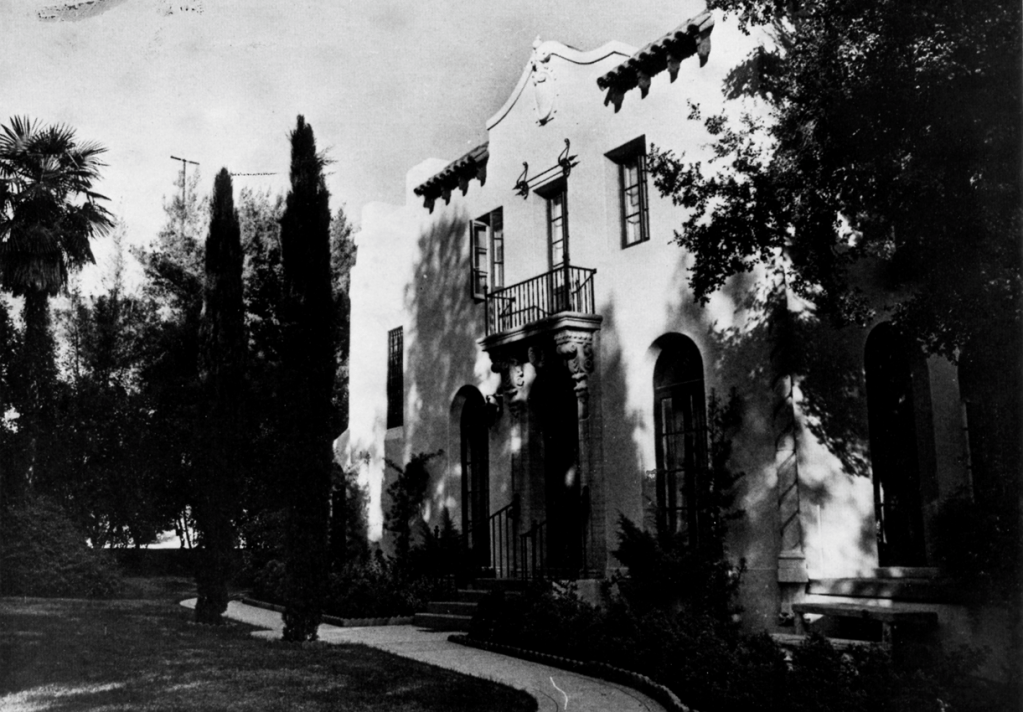
In early 2026, Upton Sinclair’s last home, in Monrovia, California, was put up for sale. The 1920s house, situated in the foothills of the San Gabriel Mountains, is listed in the National Register of Historic Places. Sinclair once described the home as bestowing him “perfect peace to write in… a garden path to walk up and down on while I planned the next paragraph, and a good public library from which I could get what history books I needed.”[1]
As the author of a recent biography of Upton Sinclair, I was contacted by reporter Paula Mejia of the San Francisco Chronicle to discuss why this home is not open to the public. It has been privately owned since his passing in 1968. Yet in 1964, the Washington Post published an account by author Arthur Weinberg and historian Lila Weinberg that suggests Sinclair had different intentions for the house. The Weinbergs described a visit to the home in Monrovia during which Sinclair, recalling his own labor activism, told the couple that after he and his wife died, the house would go to the United Auto Workers. Sinclair hoped that the UAW would “put up a fund and award a prize for the best literary work in the cause of labor and social justice. The author could use the upstairs to live-two bedrooms, a study and a bath.”[2] Curiously, the gift of the house was never realized.[3]
Historic Homes and the Case for a Sinclair Museum in Monrovia
The absence of an Upton Sinclair house has been a disadvantage for the ongoing study of his contributions to American life and thought. For example, in an August 2001 series about American writers on C-SPAN, the recognition of Upton Sinclair was set outside a Chicago slaughterhouse, rather than a historic home or museum, thus entirely omitting important phases of his life in California. He began his half century in California with the publication of The Brass Check in 1920—an expose on corruption in journalism. He got arrested for reading the Bill of Rights to striking California dock workers in 1923 and wrote a play about them, Singing Jailbirds (1924). The Wet Parade, a 1932 film, highlights his support of the temperance movement and is based on the novel of the same title which he published the previous year. In 1934 he embarked reluctantly on a campaign for Governor of California. Titled EPIC (End Poverty in California), the campaign galvanized citizens throughout the state and drew support for the New Deal before it was ultimately defeated by Hollywood moguls, The Los Angeles Times, and the citrus industry.[4]
In October 1942, Sinclair and his wife, Mary Craig, began to look for a new house—for their papers, their books, and themselves, somewhere, as Mary remembers, “farther from the center of industry, traffic and smoke.”They found a two-story concrete residence for sale on the edge of the town of Monrovia, where, Craig wrote, they “later counted twenty-two varieties of fruit trees; we would have something to eat, free of charge, every week of the year.”[5] Upton Sinclair lived there from 1942 until 1965.
There are historic homes open to the public for a range of Sinclair’s contemporaries, including fellow writers and writer-activists Jack London, Eugene Debs, and John Muir. As these examples show, a public figure’s home gives them an afterlife in public memory, beyond their study in academia. In a lecture for the Smithsonian Institute, public historian Ken Turino discusses how these historic houses serve as unique repositories of personal narrative and also cultural and social history. Furthermore, as historian Carol Kamman explains in her book on local history, “for Americans, participation has always been more attractive than simply being part of an audience.”[6] Historic house museums became prolific in the late twentieth century in the United States and the number of such museums is estimated to be between eight and sixteen thousand. Such museums, public historian Barbara Batson notes, document the literary heritage of America, as well as its political, social, and economic history.”[7]
Sinclair: the Man, the Writer, the Activist
Upton Sinclair introduced himself to American readers in 1906 with the publication of The Jungle, his exposé of the meat packing industry. For the next six decades, he would remain an unconventional and innovative figure in American life. He was also a filmmaker, a labor activist, a women’s rights advocate, and a populist health pioneer—a biography surprisingly relevant for twenty-first century Americans.

As the adult child of an alcoholic, Sinclair was almost alone among his radical colleagues in abstaining from alcohol for political reasons, and his embrace of the temperance movement is one of the many aspects by which contemporary historians might re-evaluate him. His mother’s temperance beliefs and his father’s alcoholism made him a lifelong crusader for Prohibition.
Upton Sinclair was also a man who challenged conventional masculinity. American Studies scholar Peggy Ann Brown notes that Sinclair’s “interest in reordering the family home—and particularly in communal childcare—is shown to remain consistent from early adulthood through his gubernatorial campaign in 1934.”[8] His reading of Charlotte Perkins Gilman’s theories on domestic labor and public life inspired his founding of the utopian colony Helicon Hall in 1906, created to allow both men and women full lives as artists and activists.[9]
In the first decades of the 20th century, organized labor was struggling with the question of how to cope with the emergent hegemony of large-scale corporate capitalism. In 1913, Sinclair organized the first ever picket of Rockefeller headquarters in New York City to show support for embattled coal miners who worked for Rockefeller in Colorado. Sinclair demonstrated not only how a writer can attempt to change history through literature but also how a celebrity can lend their personality to the political struggles of their times.
A conscious creator of activist popular history, Sinclair himself starred in one of the first pro-labor films, The Jungle, in 1914. As a writer, he penned the 1924 play Singing Jailbirds, which recorded the imprisonment of Wobblies in Los Angeles; the novel Oil! (1927) exposed the depredations of the oil industry in California; and another novel, Boston (1928) documented the Sacco-Vanzetti trial. In the 1940s, Sinclair wrote a series of anti-fascist spy novels, the World’s End series. The series was, as Dieter Herms has noted, “antifascist propaganda entertainingly packaged in the wrappers of popular literature.”[10] The books garnered him best-seller status again, and in 1942, at age 64, he became the oldest author to receive a Pulitzer Prize. He wrote the entire Pulitzer-winning World’s End series while living in Monrovia.
For Sinclair, his books were significant only to the degree that they exerted social influence, as the concluding pages of his autobiography reveal. He asks himself, “Just what do you think you have accomplished in your long lifetime?” and then provides ten answers.[11] All involve social change in which his books were instrumental.
Envisioning an Upton Sinclair Museum
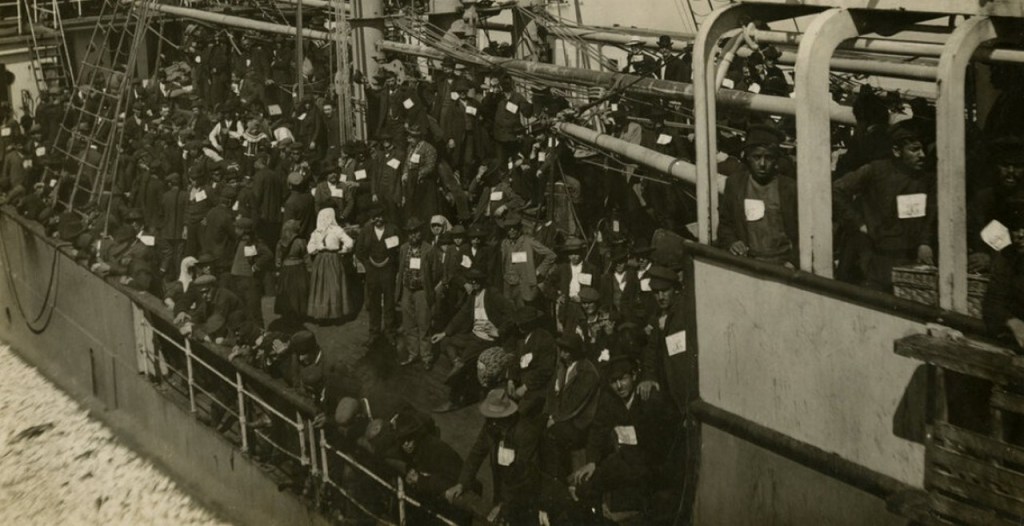
The first known sale of the Monrovia house was in 1984 for $110,000. In addition to Sinclair’s wishes, a strong case can be made that, like Mark Twain, Ernest Hemingway, and Frances Perkins, Upton Sinclair and his literary contributions deserve a house museum—Hemingway has three!—to inform Americans about his life and work. Each of the causes to which he devoted his life has a contemporary parallel: The Jungle links to the struggles of immigrant workers today as well as to the efforts to provide safer and healthier food to the public. Singing Jailbirds and King Coal (1917) are vivid stories of worker struggles that relate to the dilemma of today’s gig workers and Amazon contractors; The Wet Parade is a powerful indictment of addiction, which today includes alcohol and prescription drugs.

In addition, Sinclair’s electoral, environmental, and popular culture influence would make for an excellent historical house museum. Sinclair’s EPIC campaign for governor resonates in the history of subsequent celebrity politicians. Sinclair was also an early environmentalist—his book The Gnomobile may have been the first environmental fable written for children. Published in 1936, it was transformed into a film by Walt Disney in 1967. One advantage of an Upton Sinclair museum is that there are film versions of many of his works. The original silent film of The Jungle re-emerged in 2005.[12] The Jungle, The Wet Parade, and The Gnome-Mobile could be screened in an Upton Sinclair museum, adding an audio-visual component.
This is the museum that has yet to be constructed, and the house that has yet to be reclaimed. His home in Monrovia just sold for a sum far more than what most historical societies can afford—a staggering $2,000,000. Perhaps we don’t need the actual house that Sinclair lived in, but we do need a permanent memorial to his inspiring and historically significant life. Other options for a museum include Baltimore, where Sinclair lived for the first ten years of his life; the site of this home is part of a walking tour of Baltimore that includes twelve other significant writers. Sinclair lived from the ages of ten to twenty in New York City; all the locations where he lived were mapped by Molly Roy in my recent biography.[13] Monrovia may no longer be an option, but that is no reason for Upton Sinclair’s legacy to be forgotten.
[1] Upton Sinclair, The Autobiography of Upton Sinclair (New York: Harcourt, Brace and World, Inc., 1962), 201.
[2] Arthur and Lila Weinberg, “A Saintly Glow,” Washington Post, October 19, 1964.
[3] Correspondence with Lilly Library, liblilly@iu.edu, indicates that Sinclair left $10,000 to his son and the rest of his estate (amount unknown) to the League for Industrial Democracy.
[4] Lauren Coodley, Upton Sinclair: California Socialist, Celebrity Intellectual (Lincoln: University of Nebraska 2013), 15
[5]Mary Craig, Southern Belle, (Jackson: University Press of Mississippi, 1999), 384.
[6] Carol Kammen, On Doing Local History, 2nd edition (Maryland, Altamira Press, 2003), 167.
[7] Barbra Batson, Encyclopedia of Local History, 2nd edition, edited by Carol Kammen, Amy Wilson (Maryland, Altimura Press, 2013), 273.
[8] Peggy Ann Brown, Not Your Usual Boardinghouse Types: Upton Sinclair’s Helicon Home Colony 1906-1907, Diss., (American University, 1993).
[9] Davis, Cynthia J. Charlotte Perkins Gilman: A Biography (Stanford University Press, 2010).
[10] Dieter Herms, “An American Socialist: Upton Sinclair,” Upton Sinclair Centenary Journal 5:1 (September 1978), 52. Herms, born in 1937, must have come of age in Germany during the post-Nazi era.
[11] Upton Sinclair, The Autobiography of Upton Sinclair (New York: Harcourt Brace and World, 1962), 327.
[12] Lauren Coodley donated the film to The Academy of Motion Picture Arts and Sciences in, Los Angeles, California.
[13] Lauren Coodley, Upton Sinclair: California Socialist, Celebrity Intellectual (Lincoln: University of Nebraska 2013), 15.
Featured photo: Upton Sinclair’s Monrovia home, 1971. Photo supplied by author, courtesy of Dana Downie.





Leave a Reply