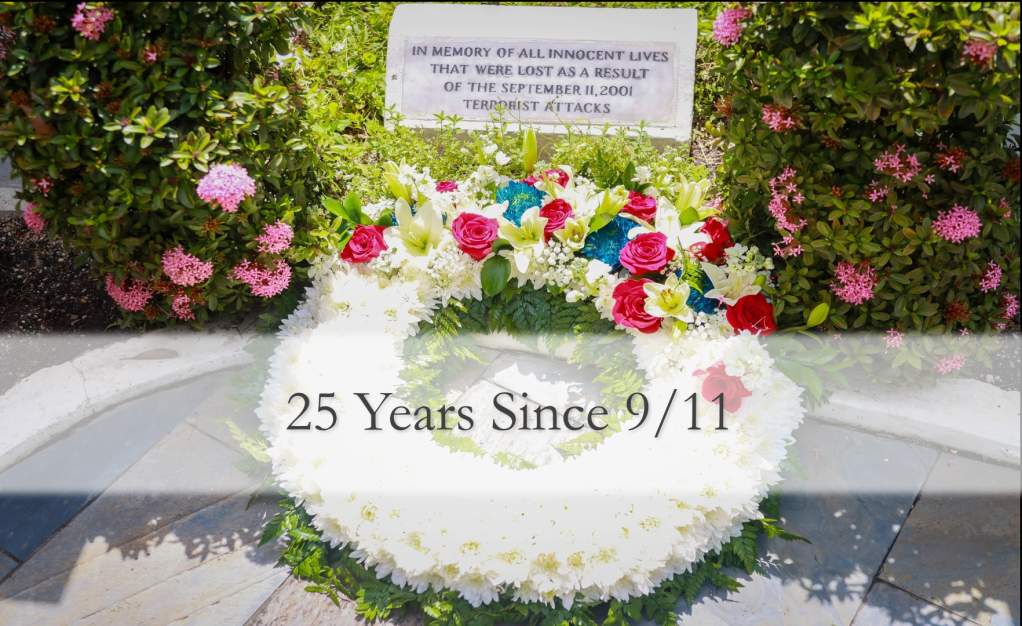
When the Twin Towers of the World Trade Center (WTC) were destroyed on September 11, 2001, the emerging narrative overwhelmingly focused on the United States and its entry into a new era of global warfare and grief. Miles away, in the southern Caribbean, the “tremors” of that morning registered with immediate and profound force in the twin-island republic of Trinidad and Tobago (T&T). While observers outside the Caribbean may assume it is a tranquil periphery to global geopolitical crises, 9/11 highlighted how tightly T&T was and remains connected to the United States.
The destruction of the WTC in New York and the aftershocks of 9/11 have influenced the economic, legal and social contours of Trinidad and Tobago for the past quarter-century. Immediately, Trinidadian nationals navigated the challenges of being cut off from their loved ones, including those who perished in the WTC collapse. The post-9/11 travel slump and soaring insurance premiums imperiled the national carrier, BWIA West Indies Airways (BWIA). The economic fallout of 9/11 accelerated BWIA’s eventual rebirth as Caribbean Airlines in 2006. 9/11 also reshaped the relationship between the United States and Trinidad and Tobago; in 2001 Washington reframed the Caribbean basin as its “Third Border.” Under immense geopolitical pressure to align with international counter-terrorism mandates, Trinidad and Tobago adopted legislation, culminating in the Anti-Terrorism Act of 2005. The essay analyzes how these security mandates forced a small nation to reshape its financial systems and intelligence-sharing mechanisms to satisfy U.S. security demands.
Loss & Survival
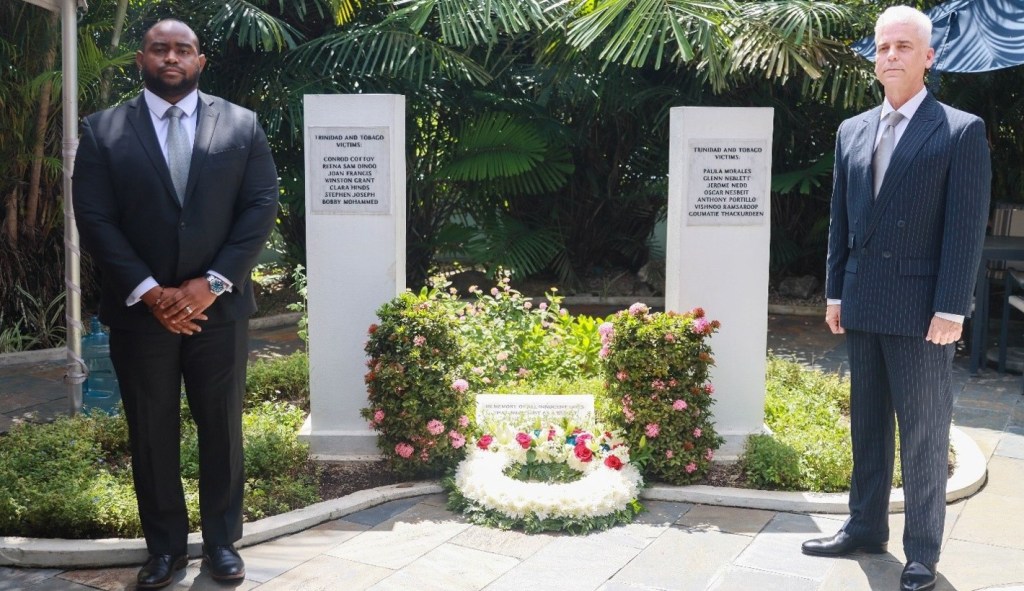
Caribbean nationals have long looked to the United States as a land of opportunity for education and jobs. According to the US census of 2000, 164,778 US residents claimed either Trinidadian or Tobagonian ancestry, and the largest concentration of T&T immigrants to the US were in Florida and New York.[1] It should come as no surprise that T&T nationals were impacted by the events of September 11, 2001. Of the 2,976 people killed on 9/11, fourteen were Trinidad and Tobago nationals employed at the WTC.[2] Their tragic deaths left their families in Trinidad in deep grief as they grappled with the pain of losing their loved ones. Camille Morales, the sister of Paula Morales, lamented the lack of closure as her sister’s body could not be recovered. In 2024, Paula Cottoy, wife of Conrad Cottoy, expressed her sorrow in a memorial to her husband. She noted, “there is no answer, no relief, only excruciating pain and sorrow.” The US embassy in Trinidad erected a memorial to the country’s nationals who died in the attacks, and the embassy arranges annual wreath laying and religious remembrance ceremonies.
Panic and fear gripped Trinidadians both in the US and back home in the immediate aftermath of the 9/11 attacks. Sherry-Ann Rakhar remembered learning of the attacks and being unable to contact relatives in Trinidad to let them know that she was safe, because phone lines in New York were jammed.[3] In the Trinidad Guardian, another Trinidadian, who gave his name as Pancho, stated that he was shopping in New York that morning and heard the sound of the first plane crashing into one of the towers. He mentioned that he was actually supposed to be at the WTC around the time the attacks occurred but ran late, and this tardiness saved his life. Knowing that he was scheduled to be at the World Trade Centre that morning, his relatives assumed he was dead. Pancho expressed a sense of gratitude for being alive, but noted that his memories from that day have left him with trauma.
There are also incredible stories of survival from Trinidadians in New York. One of the most intriguing survival stories comes from Trinidadian, Genelle Guzman-McMillan. She was employed as a temporary office worker for the Port Authority of New York and New Jersey, on the 64th floor of Tower 1 in the WTC. According to People, Guzman-McMillan was buried under rubble for 27 hours before rescuers arrived. Her right leg was crushed, her head swollen and face burned. She was hospitalized for over a month, and doctors at one point considered amputating her leg, but a fourth surgery saved it. Surviving the 9/11 attacks changed her life as it brought her closer to her faith and inspired her to document her experience in a memoire entitled, Angel in the Rubble.
These testimonies highlight that the human cost of 9/11 extended to Trinidadians and their families, both at home and in the US. Like all those who experienced the front lines of 9/11, the attacks led to feelings of grief and trauma, but also gratitude and resilience.
T&T’s Aviation Experience
Peter Hill, then Vice President of BWIA, stated, “…the 9/11 tragedy decimated the airline industry.” In the immediate aftermath of the attacks, the US Federal Aviation Administration ordered commercial aircraft to land at the nearest airport. All flights were grounded until September 14, and thereafter fewer Americans opted for air travel. In addition to fears of flying from passengers, 9/11 ushered in other problems for airlines, including soaring insurance premiums and increased security costs. The decrease in air travel seriously impacted countries whose economies were heavily dependent on tourism, including those in the Caribbean.[4]
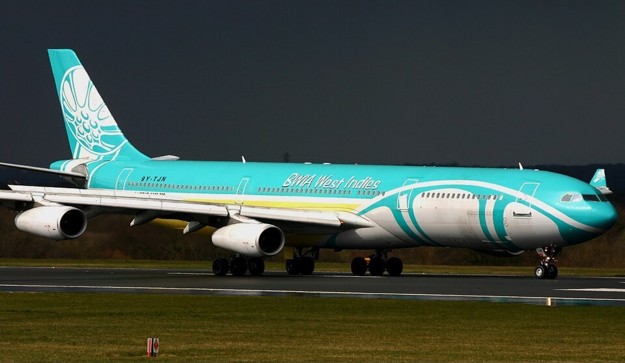
BWIA was no exception to the aftermath of the terrorist attacks. First formed in 1939 under colonial rule, the government of Trinidad and Tobago acquired full ownership of BWIA five years after independence in 1967, and the airline was partially privatized by 1994. Despite transporting over 1.4 million passengers annually to destinations in London, North and South America, and throughout the Caribbean, BWIA faced financial troubles in the late 1990s and early 2000s. This was compounded by the events of 9/11, due to a sharp decline in travel from North America to the Caribbean. In fact, the Caribbean performed worse than the rest of the world in tourist arrivals in the last quarter of 2001.[5] Even the Carnival season of February 2002 was surprisingly poor. Travel between the two nations dropped despite the close proximity of the US to Trinidad and Tobago, business ties (including in oil and gas), and family connections. According to a contemporary analysis in Trinidad and Tobago Newsday, this was “primarily due to major shortfalls of 14 percent to 28 percent off target on North American routes with most traditional tourists staying at home.”
A post 9/11 drop in visitor arrivals meant huge losses for BWIA, and revenues declined at a rapid rate. The Trinidad Express reported in 2003 that, “BWIA is hurtling off the runway, buffeted in part by the turbulence of the Gulf War, the lingering effects of 9/11, high fuel prices and a global economic slowdown.” By December 2006, the government of Trinidad and Tobago made the decision to end the operations of BWIA and approved a $250 million capital injection for a new carrier; Caribbean Airlines (CAL). With support from the government of Trinidad and Tobago, newspapers reported that “CAL was given a clean balance sheet, a leaner flight schedule, subsidized fuel and a smaller staff.” The transition inspired hope for the future of aviation in the region but also brought regret and disappointment from the public, over the end of BWIA. Though the name was still reflective of T&T’s colonial past, newspapers noted that BWIA “had come to embody a spirit of optimism as the country moved from colonial status to independence.” Acquiring majority and then full ownership of the airline in the 1960s signified that the government of Trinidad and Tobago were eager to enter the era of independence with plans for economic stability and a sense of self-reliance. Despite the financial challenges that worsened in the aftermath of 9/11, BWIA served as a symbol of national pride and nationhood.
Source
The “Third Border”
The Third Border Initiative (TBI) was proposed by US President George W. Bush at the April 2001 Summit of the Americas. Led by the US in partnership with the Caribbean, this initiative sought to improve cooperation between the two territories on matters of security.[6] Given the proximity of the Caribbean to the United States, the region was of great importance in the US pursuit of national security, especially in the fight against the drug trade. The US therefore considered the Caribbean its “third border,” which needed protection in order to safeguard US national security interests. Following the 9/11 attacks, the TBI “was expanded to focus directly on issues related to US homeland security.[7] Cultural anthropologist, Kimberley McKinson notes that this “resulted in an increase and intensification of programmes aimed at strengthening the anti-terrorist capabilities of the police and military and the adoption of anti-terrorist resolutions and legislation in the Caribbean.”[8] For Trinidad and Tobago, these efforts manifested in the creation of the Anti-Terrorism Act of 2005. Enacted on September 13th, the Act aimed “to protect all citizens of Trinidad and Tobago and the international community from the evolving threats posed by terrorist actors.” It criminalized both terrorism and the financing of terrorism. This legislation reshaped financial protocols in T&T as institutions are now obliged to disclose transactions suspected of being linked to terrorist acts, and the Financial Intelligence Unit of T&T is empowered to detect money laundering and terrorist financing. With the Anti-Terrorism Act, T&T was positioned to deal with the reality of evolving security threats in the post 9/11 era. It should be noted that implementing such legislation went beyond standing in solidarity with the United States and other allies in the fight against terrorism; T&T’s decision helped the much smaller nation itself to navigate geopolitical pressure from the colossus to its north.
President Bush set the tone for the US approach to foreign policy just days after 9/11 when he stated, “every nation in every region now has a decision to make. Either you are with us or you are with the terrorists. From this day forward, any nation that continues to harbor or support terrorism will be regarded by the United States as a hostile regime.” Given the close connections to and reliance on the United States, especially for trade, the Caribbean could have been at a great disadvantage if it did not stand with the US in the fight against terrorism. This was especially the case with Trinidad and Tobago considering the reality of a 1990 attempted coup led by Islamic insurgents with ties to Libya. Through the TBI, the United States highlighted that it had leading influence over decisions relating to national security. As Dion Phillips, Professor of Sociology notes, “the Caribbean nations welcome the security more so because of the incidental protection it offers to their fragile tourist-dependent economies that are sensitive to political and other threats.”[9]
The tragedy of 9/11 certainly reshaped the United States; however, Caribbean countries, close neighbors to the US, also experienced short- and long-term effects. For Trinidad and Tobago, 9/11 impacted the twin islands socially, economically, and legislatively. Nationals perished in the attacks, while survivors experiences lingering trauma. Beyond the human impact, 9/11 also affected the operations of Trinidad and Tobago’s national airline, putting the nail in the proverbial coffin for BWIA. While many airlines around the world suffered in the aftermath of 9/11, the aviation experience in T&T and the wider Caribbean was unique because of the sharp decline in travel from the United States. Finally, Trinidad and Tobago was forced to enter the world of counter-terrorism in order to protect the United States’ “third border.” While both nations influenced each other through travel, migration, and economics, the US dominated the post-9/11 cooperation efforts against terrorism, with lasting impacts on Trinidad and Tobago a quarter century later.
[1] John Powell, The Encyclopedia of North American Immigrations (Facts on File, 2005), 296.
[2] 9/11 Investigation, Federal Bureau of Investigation, https://www.fbi.gov/history/cases-and-criminals/911-investigation; Names of Trinidadians killed in 9/11 are Conrad Cottoy, Reena Sam-Dinno, Joyce Rose Cummings, Winston Grant, Clara Hinds, Stephen Joseph, Glenroy Neblett, Jerome Nedd, Oscar Nesbitt, Anthony Protillo, Vinsnoo Ramsaroop, Goumatie Thakurdeen, Boyie Mohammed, and Paula Morales; “14 Killed on 9/11 Remembered”, Daily Express. March 20, 2018. https://trinidadexpress.com/news/local/14-killed-on-9-11-remembered/article_5403fe72-3ae6-51c9-bd61-2c8d0b3bc9cd.html
[3] Sherry-Ann Rakhar, interview with Danalee Jahgoo, Sangre Grande Trinidad, August 6, 2026.
[4] Farzana Noshab, “Global Economic Implications of 9/11 attacks” Strategic Studies, Vol 22, no. 3 Autumn (2002): 207-227.
[5] Dion E. Phillips, “Terrorism and Security in the Caribbean: Before and After 9/11,” in Armed Forces and Conflict Resolution: Sociological Perspectives, ed Guiseppi Caforio, Gerard Kummel, Bandana PurKayastha (Emerald Group Publishing Limited, 2008), 107.
[6] Kimberley McKinson, “The Incursion and its Hauntings: Modernity, Discipline and Compromised Citizenship,” in Global Raciality: Empire, Post Coloniality, Decoloniality, ed Paola Bacchetta, Sunaina Maira, Howard Winant (New York: Routledge, 2019).
[7] Ibid.
[8] Ibid.
[9] Dion E. Phillips, “Terrorism and Security in the Caribbean: Before and After 9/11,” in Armed Forces and Conflict Resolution: Sociological Perspectives, ed Guiseppi Caforio, Gerard Kummel, Bandana Purkayastha (Emerald Group Publishing Limited, 2008), 97.
Featured Photo: Part of a memorial dedicated to the victims of the 9/11 attacks at the U.S. Embassy, Port-of-Spain, Trinidad. Photo source: U.S. Embassy Trinidad and Tobago Facebook page. 11 September, 2025.